
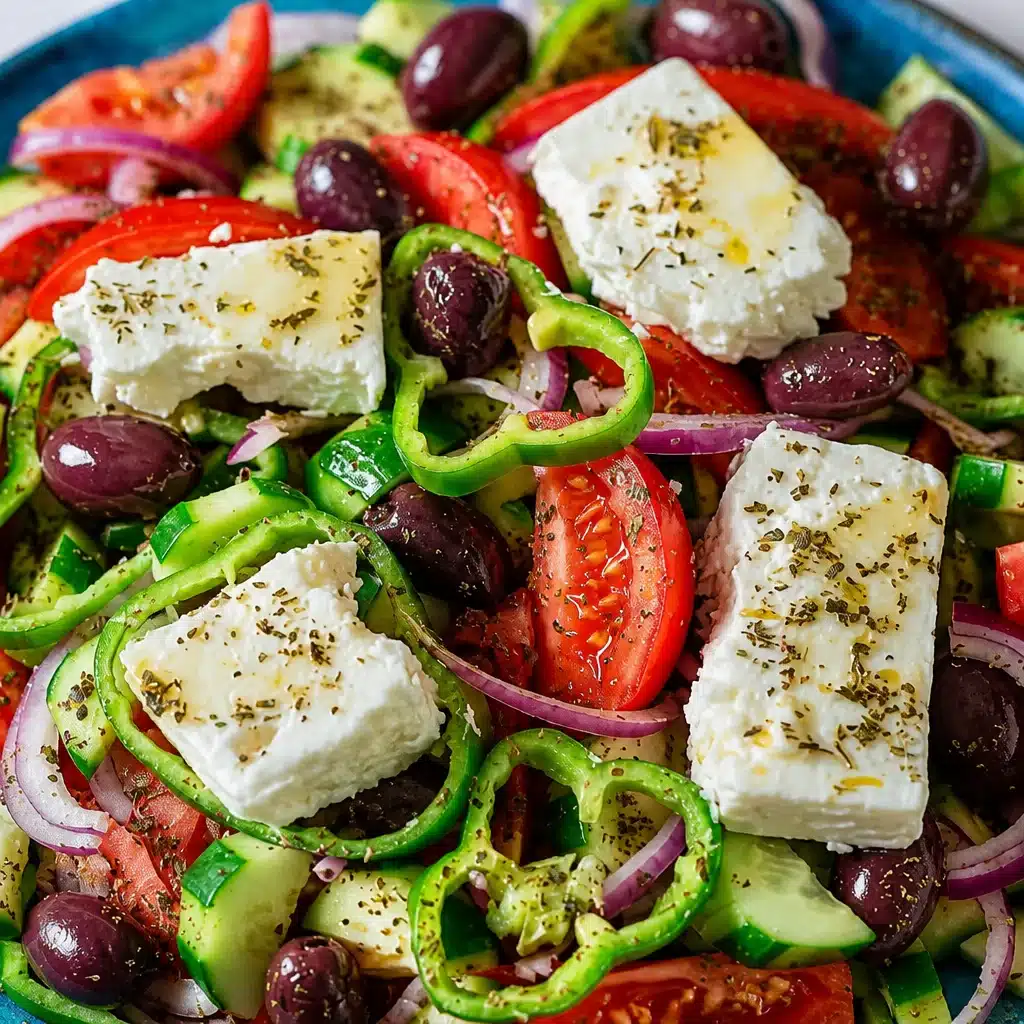
Horiatiki Traditional Greek Salad is my go to move when I want something fresh, filling, and honestly a little impressive without doing much work. You know those days when it is hot, you are tired, and cooking sounds like a chore? This salad is the answer. It is crunchy, juicy, salty, and bright, all at the same time. And it is one of those recipes where good ingredients do most of the heavy lifting. If you can chop a few things and drizzle olive oil, you can make this today.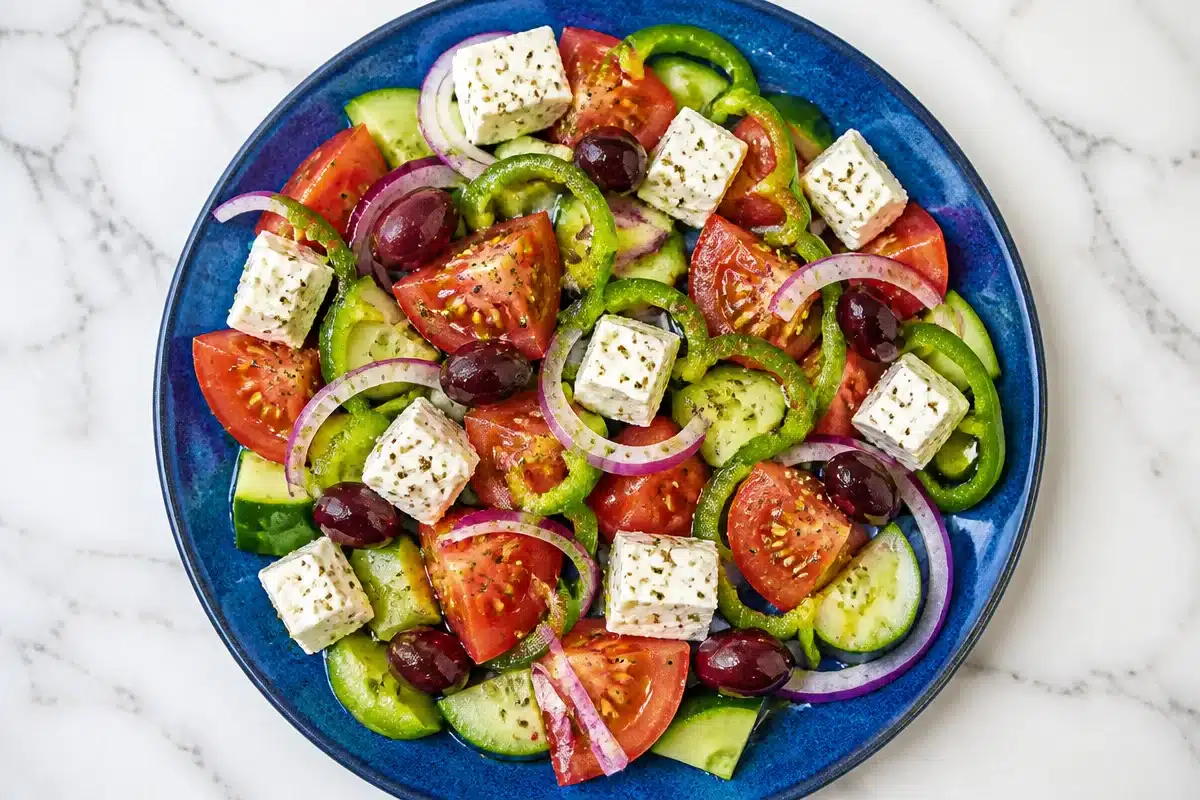
What is in Traditional Greek Salad (Horiatiki)?
Let us clear up something right away. A real Horiatiki Traditional Greek Salad is not the leafy, lettuce packed “Greek salad” you might see at some restaurants. Traditional horiatiki is a village salad. It is simple and rustic, and it celebrates what is in season.
Here is what you should expect in a classic bowl:
- Tomatoes that taste like tomatoes, juicy and a little sweet
- Cucumber for crunch and coolness
- Green bell pepper for that fresh bite
- Red onion (or spring onion) for a sharp, clean kick
- Kalamata olives or other Greek olives
- Feta, usually in a slab on top, not crumbled into dust
- Olive oil and oregano to pull it all together
Sometimes you will see capers added, and that is totally normal in many parts of Greece. One more thing people debate is vinegar. Some add a little red wine vinegar, some do not. I do, but lightly.
When I am serving this as lunch, I pair it with something a bit heartier, like this Greek chicken salad. It keeps the same vibe but adds more protein, and it makes meal prep feel less boring.
How to Make Authentic Greek Horiatiki Salad
I have made this salad so many times that I can almost do it on autopilot, but I still get excited when I slice the first tomato. The smell alone tells you it is going to be good. The key is not rushing the prep. It is simple, but each cut matters because you actually taste every ingredient.
Step by step, the easy way
Here is how I make Horiatiki Traditional Greek Salad at home:
- Cut tomatoes into wedges or big chunks. I like wedges because they hold their shape.
- Slice cucumber into thick half moons. If the skin is waxy, peel stripes off it.
- Slice green bell pepper into rings or thin strips.
- Thinly slice red onion. If it is very strong, soak the slices in cold water for 10 minutes, then drain.
- Add olives. Keep them whole if you can. It feels more authentic and they stay juicy.
- Place a slab of feta on top. Yes, a slab. That is part of the charm.
- Drizzle with extra virgin olive oil, sprinkle oregano, and add a pinch of salt if needed.
- If you want, add a tiny splash of red wine vinegar.
Then I give it a gentle toss around the edges, not a full aggressive mix, because I like the feta staying in big pieces. If I am serving guests, I leave the feta slab whole and let everyone break off a bit.
“I tried your horiatiki method with the feta slab and the oregano on top, and it tasted like the little taverna salad I had in Crete. I did not think it would be that different, but it really was.”
Quick note on tools: you only need a sharp knife, a cutting board, and a big bowl. That is it. No special gadgets, no stress.
The secret to a great Greek salad
If I had to boil it down, the “secret” is not a secret ingredient. It is restraint and quality. A Horiatiki Traditional Greek Salad does not hide behind heavy dressing. So if your olive oil is bland or your tomatoes are sad, the whole salad feels flat.
Here are my best practical tips that actually make a difference:
1. Use the ripest tomatoes you can find.
If tomatoes are out of season, I still make it, but I choose cherry tomatoes or grape tomatoes because they tend to be sweeter year round.
2. Go big on the olive oil.
Not greasy, just generous. This salad basically creates its own dressing in the bottom of the bowl. And yes, you should mop it up with bread.
3. Do not over salt.
Feta and olives bring a lot of salt already. I usually add a pinch, taste, then decide.
4. Let it sit for 5 to 10 minutes.
This is my lazy little trick. The tomatoes release juices, the oregano wakes up, and everything tastes more “together.”
5. Keep it simple.
No lettuce, no bottled dressing, no random sweet add ons. This is one of those times where less really is more.
Also, if you like Greek flavors but want something you can pack for lunch without worrying about soggy veggies, this Greek yogurt chicken salad is a great option. Different texture, same bright, herby feel.
Ingredients for an authentic horiatiki
Below is a simple, reliable ingredient list that works every time. You can scale it up or down depending on how many people you are feeding. This is my usual “serves two as a meal, four as a side” amount.
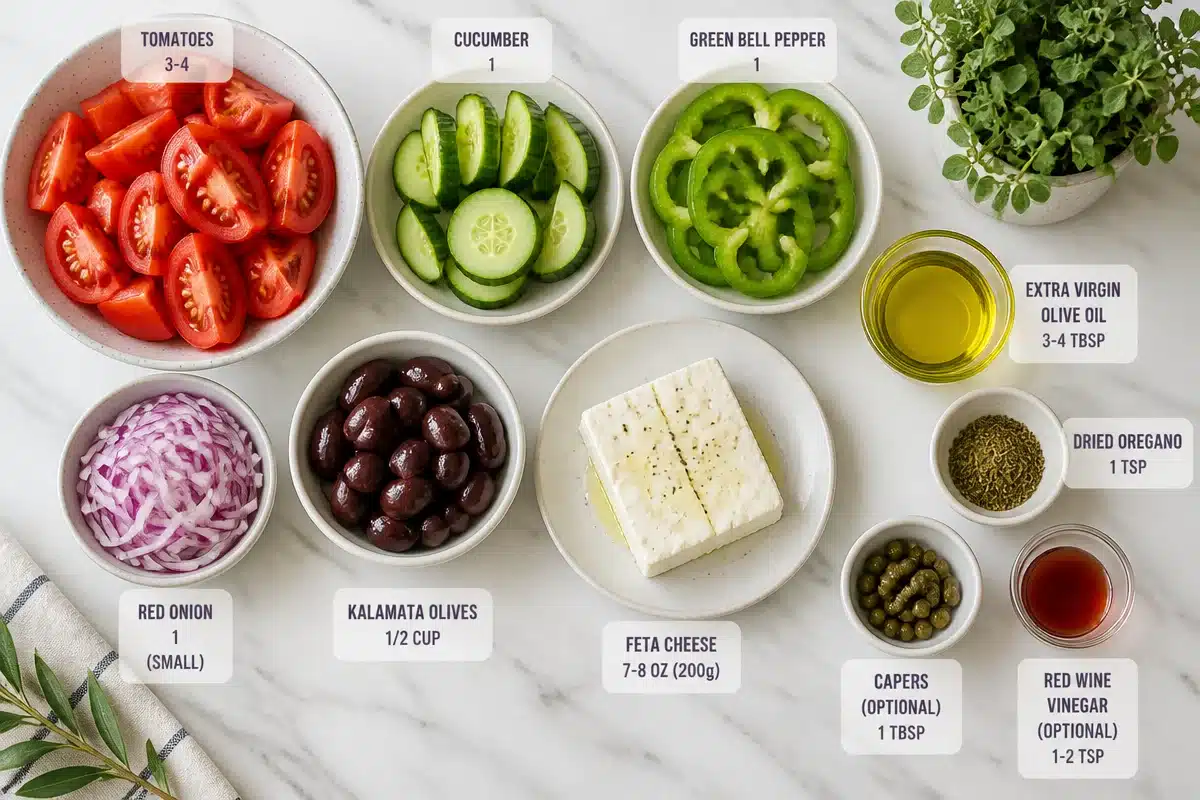
What you will need
- 3 to 4 ripe tomatoes, cut into wedges
- 1 cucumber, sliced thick
- 1 green bell pepper, sliced
- 1 small red onion, thinly sliced
- A handful of Kalamata olives
- About 150 to 200 grams feta, preferably in a block
- 3 to 4 tablespoons extra virgin olive oil
- 1 teaspoon dried oregano (or more to taste)
- Optional: 1 to 2 teaspoons red wine vinegar
- Optional: a few capers
And here is a little SEO friendly quick reference that also makes shopping easier:
One more ingredient note: feta matters. If you can find Greek feta made with sheep milk (or sheep and a bit of goat), the flavor is tangier and creamier. If all you have is a basic supermarket block, that is still fine. Just do not buy the dry pre crumbled stuff for this.
How do I store leftover horiatiki salad?
I will be honest. Horiatiki Traditional Greek Salad is best right after you make it, when everything is crisp and the feta is still firm. But leftovers happen, and I still eat them gladly.
Here is how to store it so it stays as good as possible:
- Put leftovers in an airtight container and refrigerate.
- If you can, store the feta separately and add it back later. It keeps the texture nicer.
- Eat within 1 day for best crunch. It is still edible on day 2, but softer and juicier.
- If it looks watery, do not panic. Stir it and use the juices as a dressing for bread, rice, or even grilled chicken.
My little leftover trick: I toss the next day salad with chickpeas to make it feel new again. It turns into a quick lunch that actually keeps me full.
Common Questions
Do I have to use feta in a block?
No, but it really helps. A block stays creamy and you get big bites of cheese instead of salty dust.
Can I add lettuce?
You can, but then it is not traditional horiatiki. If you love lettuce, add it, just know it changes the whole feel of the salad.
What is the best olive oil for this?
Use the best extra virgin olive oil you can afford, since it is basically the dressing. If it tastes peppery or fruity on its own, it will taste great here.
Should I peel the cucumber?
If the skin is tender, I leave it on. If it is thick or waxy, I peel stripes so it still looks nice and has less chew.
Is red wine vinegar required?
Not required. I like a small splash for brightness, especially when tomatoes are not at peak season.
A salad you will want on repeat
Once you make Horiatiki Traditional Greek Salad a couple of times, it becomes one of those recipes you can throw together without thinking. It is fresh, flexible, and it makes even a simple dinner feel special. Focus on ripe tomatoes, good feta, and olive oil you actually like, and you will taste the difference right away. If you want to compare styles and see how other cooks keep it classic, check out Greek Salad (Traditional Horiatiki Recipe) – The Mediterranean Dish and How to Make Authentic Greek Salad (Horiatiki Salata). Now grab a bowl, slice those tomatoes, and make it today. Your future self is going to be very happy at lunch time.
Print
Traditional Greek Horiatiki Salad
- Total Time: 15 minutes
- Yield: 4 servings
- Diet: Vegetarian
Description
A refreshing and rustic Greek salad made with ripe tomatoes, cucumber, bell pepper, red onion, Kalamata olives, and feta, all dressed in olive oil and oregano.
Ingredients
- 3 to 4 ripe tomatoes, cut into wedges
- 1 cucumber, sliced thick
- 1 green bell pepper, sliced
- 1 small red onion, thinly sliced
- A handful of Kalamata olives
- 150 to 200 grams feta, preferably in a block
- 3 to 4 tablespoons extra virgin olive oil
- 1 teaspoon dried oregano (or more to taste)
- Optional: 1 to 2 teaspoons red wine vinegar
- Optional: a few capers
Instructions
- Cut tomatoes into wedges or big chunks.
- Slice cucumber into thick half moons.
- Slice green bell pepper into rings or thin strips.
- Thinly slice red onion and soak in cold water for 10 minutes if strong.
- Add olives, keeping them whole if possible.
- Place a slab of feta on top.
- Drizzle with olive oil, sprinkle with oregano and salt if needed.
- Optionally add a tiny splash of red wine vinegar.
- Toss gently to combine without breaking the feta too much.
Notes
Use the ripest tomatoes for the best flavor. Let the salad sit for 5 to 10 minutes before serving to enhance flavors.
- Prep Time: 15 minutes
- Cook Time: 0 minutes
- Category: Salad
- Method: No-Cook
- Cuisine: Greek