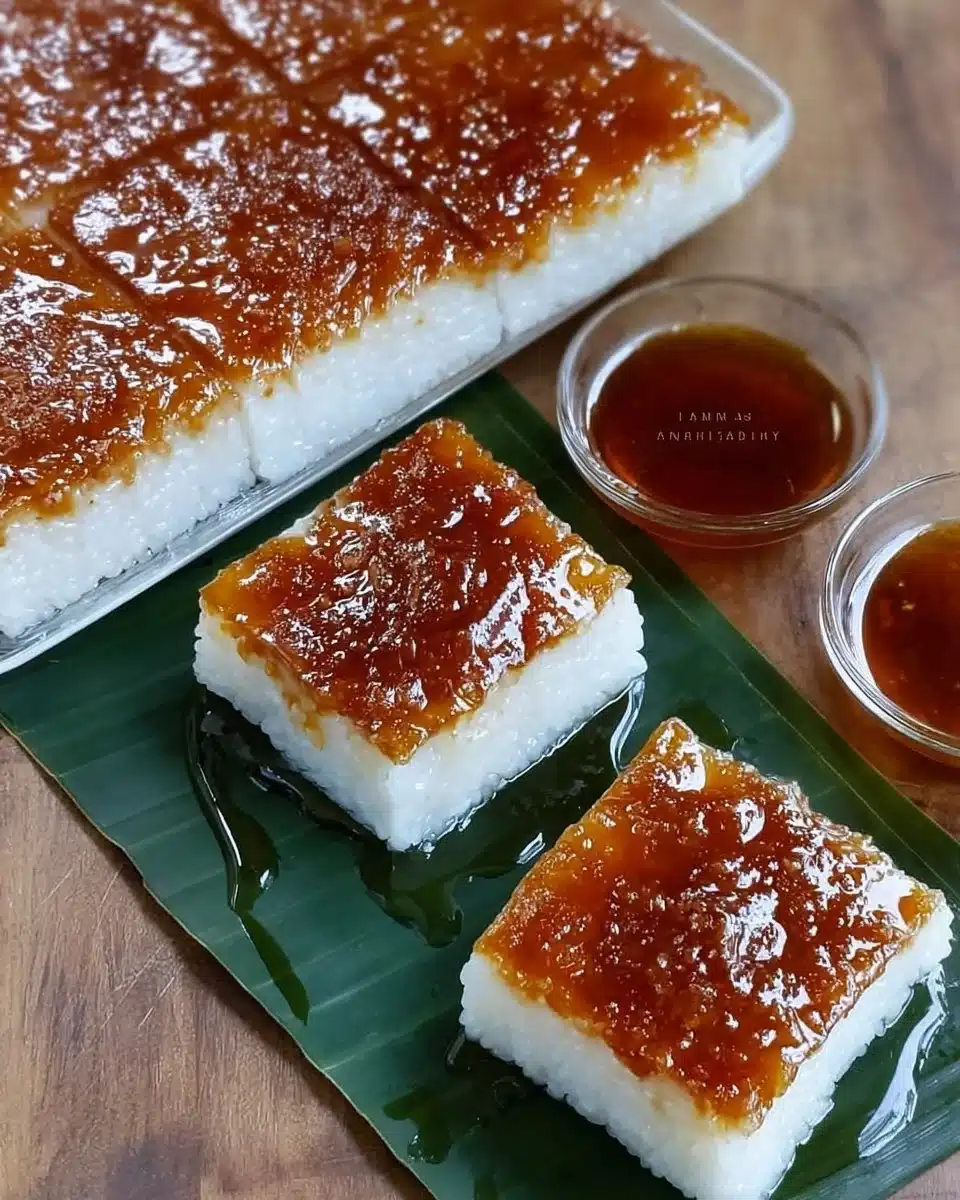
Sticky Rice Cake | Sticky Rice Bibingka
Sticky Rice Cake, also known as Sticky Rice Bibingka, is a delightful dessert that offers a beautiful blend of flavors and textures. This beloved dish is particularly popular in Filipino cuisine and is often enjoyed during festive occasions, family gatherings, or as a comforting treat. The combination of glutinous rice and rich coconut milk makes it a unique delicacy that everyone will appreciate.
Why Make This Recipe
Making Sticky Rice Cake is more than just preparing a dessert; it’s about creating a delicious experience that can be shared with loved ones. The comforting aroma of pandan leaves and the sweet scent of coconut milk wafting through your kitchen is sure to entice anyone nearby. This recipe is approachable, allowing beginners to craft a dish that feels homemade and special. Plus, the vibrant layers of flavor highlight the versatility of simple ingredients, making it a wonderful addition to any celebration or a sweet indulgence after a meal.
How to Make Sticky Rice Cake
Creating Sticky Rice Cake may seem daunting at first, but with the right ingredients and a little bit of patience, you’ll achieve a mouthwatering result that will impress. Below, you will find all the steps needed to make this delectable dessert.
Ingredients:
- 5 cups glutinous rice (malagkit rice)
- 4 cups water
- Pandan leaves (for flavor)
- 1 tbsp oil
- 5 cups coconut milk (second extract)
- 1 & 1/3 cups white sugar
- A pinch of salt
- 4 cups coconut milk (first extract)
- 1 & 1/3 cups brown sugar
- 1/2 sliced sugarcane (panutsa)
Directions:
- Wash the glutinous rice twice and drain it well. This process removes excess starch and ensures the rice cooks evenly.
- In a large pot, add the cleaned rice, water, oil, and pandan leaves. Cook until most of the liquid has dried up, stirring occasionally.
- Once the liquid has evaporated, pour the second extract of coconut milk into the pot. Add a couple of pandan leaves, salt, and white sugar. Stir to dissolve the sugar and bring the mixture to a gentle boil over medium heat.
- Add the cooked glutinous rice to the pot. Stir continuously while cooking until the coconut milk is fully absorbed by the rice. This may take a few minutes.
- Grease a baking pan with butter or margarine, then add the glutinous rice mixture. Be sure not to fill the pan completely; leave some space at the top. Flatten the rice mixture evenly and set it aside.
- To prepare the sauce, combine the first extract of coconut milk and brown sugar in a separate pan. Mix thoroughly to dissolve the sugar and cook over medium heat for about 10 minutes.
- Add the sliced sugarcane to the sauce and stir well until it dissolves. Continue cooking until the sauce thickens.
- Pour the sauce over the prepared glutinous rice mixture in the baking pan.
- Preheat your oven to 180°C (350°F) and bake the Sticky Rice Cake for about 40 minutes or until the top is slightly golden and firm to the touch. If you don’t have an oven, you can cook the toppings in a saucepan, adding a bit of cornstarch to help it thicken more quickly before pouring it over the rice.
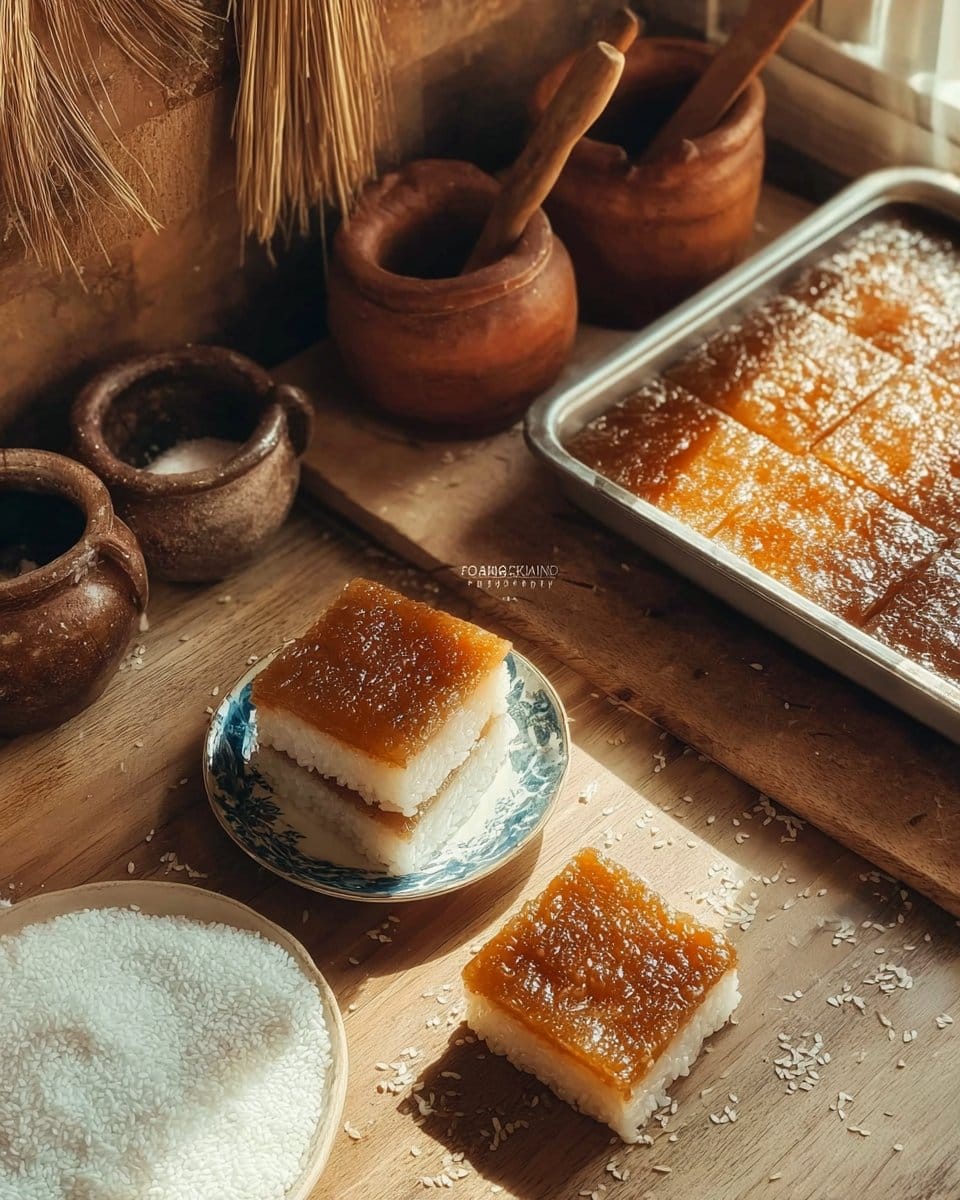
- Once baked, allow the Sticky Rice Cake to cool slightly before serving. This will help set the layers and make slicing easier.
Pro Tips for Success Sticky Rice Cake
Use Fresh Ingredients: Fresh pandan leaves and coconut milk can significantly enhance the flavor of your Sticky Rice Cake. Look for quality ingredients in your local Asian market.
Don’t Rush the Cooking: Give the sticky rice time to absorb the coconut milk properly. Stirring continuously helps achieve the right consistency.
Adjust Sugar to Taste: If you prefer a sweeter or less sweet cake, feel free to adjust the amounts of white and brown sugar in the recipe according to your taste.
Grease Your Bakeware Well: Ensure your baking pan is adequately greased to prevent sticking and make for an easier serving experience.
Choose the Right Rice: Use glutinous rice for the best results. This type of rice is key to achieving that chewy and sticky texture characteristic of this dish.
Experiment with Toppings: Top your Sticky Rice Cake with toasted grated coconut, mango slices, or even a sprinkle of cinnamon for an added layer of flavor.
Flavor Variations Sticky Rice Cake
Ube (Purple Yam) Addition: Introduce ube puree into your rice mixture for a vibrant purple hue and a subtly sweet flavor. Simply mix it in with the rice and coconut mixture before baking.
Cheese Topping: Add slices of cheese on top before you bake the cake. The salty cheese will contrast delightfully with the sweetness of the cake.
Mango Twist: Serve the Sticky Rice Cake with fresh mango slices on the side or mixed into the batter for a tropical twist.
Nutty Profile: Incorporate chopped nuts like toasted cashews or almonds into the coconut milk sauce for a delightful crunch and enhanced flavor.
Coconut Flakes: Top the finished cake with toasted coconut flakes for a more pronounced coconut flavor and added texture.
Serving Suggestions Sticky Rice Cake
Sticky Rice Cake is versatile and can be served in various ways to please your guests. Here are some serving suggestions to consider:
- Traditional Serving: Slice the cake into squares and serve warm, allowing guests to enjoy it as a cozy dessert.
- Accompanied by Fruits: Pair with sliced fresh fruits, particularly tropical options like bananas or mangoes, to balance the richness of the cake.
- Drizzle of Coconut Cream: For extra richness, drizzle additional coconut cream over the top before serving.
- As a Snack or Breakfast: Sticky Rice Cake works beautifully as a light snack or breakfast option, paired with a cup of coffee or a refreshing drink.
- Creative Plating: Serve in decorative bowls or on wooden serving platters, garnished with mint or additional fruit slices to elevate the presentation.
Storage and Freezing Instructions Sticky Rice Cake
Proper storage will help preserve the deliciousness of your Sticky Rice Cake:
At Room Temperature: If you plan to consume the cake within a day or two, store it in an airtight container at room temperature to maintain moisture.
Refrigeration: For longer storage, refrigerate the cake in an airtight container. It can last up to a week in the fridge.
Freezing: If you have leftovers, freeze the cake by wrapping it tightly in plastic wrap and then placing it in a freezer-friendly bag or container. It can be frozen for up to 3 months. To reheat, simply thaw in the refrigerator overnight and warm it up in the microwave or in the oven.
Nutrition Facts (Per Serving)
Here’s a quick look at the nutrition for each serving of Sticky Rice Cake:
| Nutrition | Amount |
|—————|————|
| Calories | 290 |
| Protein | 3g |
| Carbohydrates | 48g |
| Fat | 10g |
| Fiber | 1g |
| Sodium | 150mg |
FAQ About Sticky Rice Cake
What is Sticky Rice Cake?
Sticky Rice Cake, or Sticky Rice Bibingka, is a traditional Filipino dessert made primarily from glutinous rice, coconut milk, and sugar. It’s known for its unique chewy texture and sweet flavor, often enhanced with additional toppings or ingredients like pandan leaves.
Can I make Sticky Rice Cake without an oven?
Yes! If you don’t have an oven, you can prepare the sticky rice mixture and cook the sauce on the stovetop. Just ensure to thicken the sauce with some cornstarch and pour it over the rice mixture in the pan, allowing it to set.
How do I know when the Sticky Rice Cake is done?
The Sticky Rice Cake is ready when the top is slightly golden and the cake has a firm texture. If it is still soft or too sticky to touch, it likely needs a bit more time in the oven.
Can I substitute glutinous rice with regular rice?
No, glutinous rice is essential for achieving the correct texture of this dish. Regular rice would not provide the same sticky consistency, and the final product would not resemble the traditional Sticky Rice Cake.
What can I use if I don’t have pandan leaves?
If you can’t find pandan leaves, you can use a small amount of pandan extract for flavoring. Alternatively, you can substitute with an infusion of vanilla for a different yet delicious taste.
Final Thoughts
Sticky Rice Cake is indeed a heartwarming dessert that captures the essence of Filipino tradition while also being adaptable to different flavors and preferences. Whether you’re enjoying it as a treat for yourself or sharing it with friends and family, this delightful dish will surely leave lasting memories. So roll up your sleeves, gather your ingredients, and dive into the delightful process of making Sticky Rice Cake today!
Print
Sticky Rice Cake | Sticky Rice Bibingka
- Total Time: 70
- Yield: 12 servings
- Diet: Vegetarian
Description
A delightful Filipino dessert made with glutinous rice and rich coconut milk, perfect for festive occasions.
Ingredients
- 5 cups glutinous rice (malagkit rice)
- 4 cups water
- Pandan leaves (for flavor)
- 1 tbsp oil
- 5 cups coconut milk (second extract)
- 1 & 1/3 cups white sugar
- A pinch of salt
- 4 cups coconut milk (first extract)
- 1 & 1/3 cups brown sugar
- 1/2 sliced sugarcane (panutsa)
Instructions
- Wash the glutinous rice twice and drain it well.
- In a large pot, add the cleaned rice, water, oil, and pandan leaves. Cook until most of the liquid has dried up, stirring occasionally.
- Once the liquid has evaporated, pour the second extract of coconut milk into the pot. Add a couple of pandan leaves, salt, and white sugar. Stir to dissolve the sugar and bring to a gentle boil.
- Add the cooked glutinous rice to the pot. Stir continuously until the coconut milk is fully absorbed by the rice.
- Grease a baking pan and add the glutinous rice mixture, leaving some space at the top. Flatten it evenly.
- For the sauce, combine the first extract of coconut milk and brown sugar in a pan. Cook over medium heat until the sugar dissolves and sauce thickens.
- Add the sliced sugarcane to the sauce and stir well.
- Preheat your oven to 180°C (350°F) and bake for about 40 minutes until slightly golden and firm.
- Allow to cool slightly before serving.
Notes
Use fresh ingredients for the best flavor. Adjust sugar to taste and experiment with toppings like toasted coconut or mango slices.
- Prep Time: 30
- Cook Time: 40
- Category: Dessert
- Method: Baking
- Cuisine: Filipino