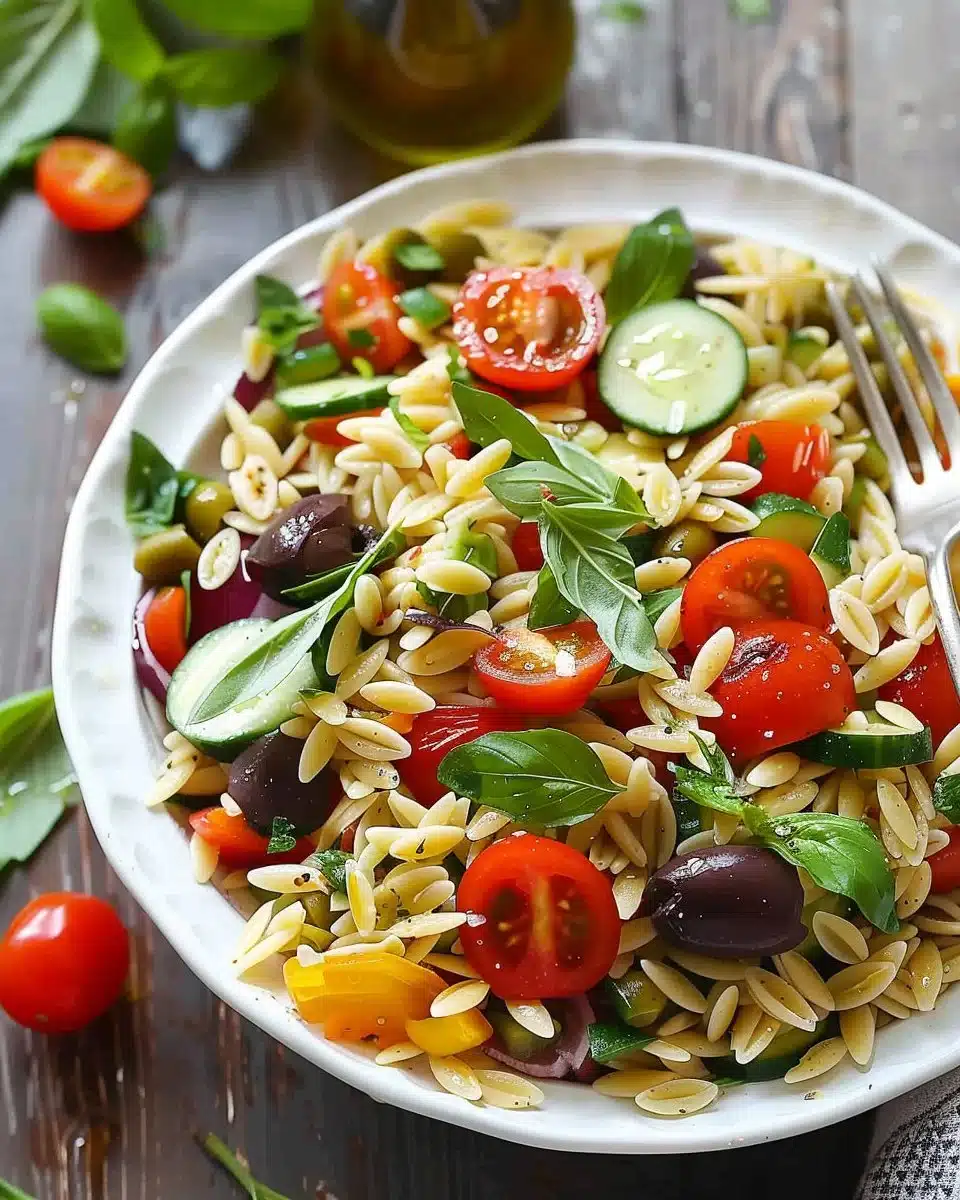
Orzo Salad
Orzo Salad is a bright, easy-to-make dish that’s perfect for weeknight dinners, potlucks, and packed lunches. If you want to turn this into a heartier meal, try pairing it with a grilled chicken orzo salad for an effortless protein boost and summer-ready flavor.
This recipe blends tender orzo pasta with crisp vegetables, briny olives, tangy feta, and a simple lemon-balsamic dressing. It’s quick to assemble, fridge-friendly, and flexible—so you can adapt it to what’s in your pantry or what your family likes. Read on for a friendly, step-by-step guide, tips, variations, nutrition info, and answers to common questions.
why make this recipe
Orzo Salad checks a lot of practical boxes. It cooks fast, holds up well in the fridge, and serves a crowd without a last-minute scramble. The flavors are bright and balanced: lemon and balsamic bring acidity, olives and feta add salt and umami, and spinach and cucumber contribute freshness and texture.
It’s also a smart weeknight option because you can prep components in advance. Make the dressing, chop the vegetables, or even cook the orzo the night before. That flexibility makes it easy to pull together a healthy lunch or side dish in minutes.
This salad is family-friendly and kid-approachable—small pasta shapes, mild feta, and sweet tomatoes are usually crowd pleasers. It’s also a great vehicle for seasonal produce: swap in summer herbs or roasted vegetables in cooler months.
how to make Orzo Salad
The method is straightforward: cook the orzo, whisk up a dressing, and toss everything together while the pasta is still a little warm so it soaks up flavor. Here’s a clear set of steps that follow the original recipe components.
- Cook the orzo according to package directions in salted water until al dente. Drain and rinse briefly with cool water to stop the cooking; toss with a splash of olive oil to keep it from sticking.
- Make the dressing by whisking together extra virgin olive oil, freshly squeezed lemon juice, balsamic vinegar, Dijon mustard, dried oregano (or Italian seasoning), salt, and freshly ground black pepper. Taste and adjust acidity or seasoning as needed.
- Assemble the salad: in a large bowl, combine the cooked orzo, halved cherry tomatoes, quartered cucumbers, sliced black and green olives, crumbled feta, and baby spinach. Pour the dressing over the salad and toss gently until everything is evenly coated. Let the salad sit for 10–15 minutes to allow flavors to meld, then serve or chill.
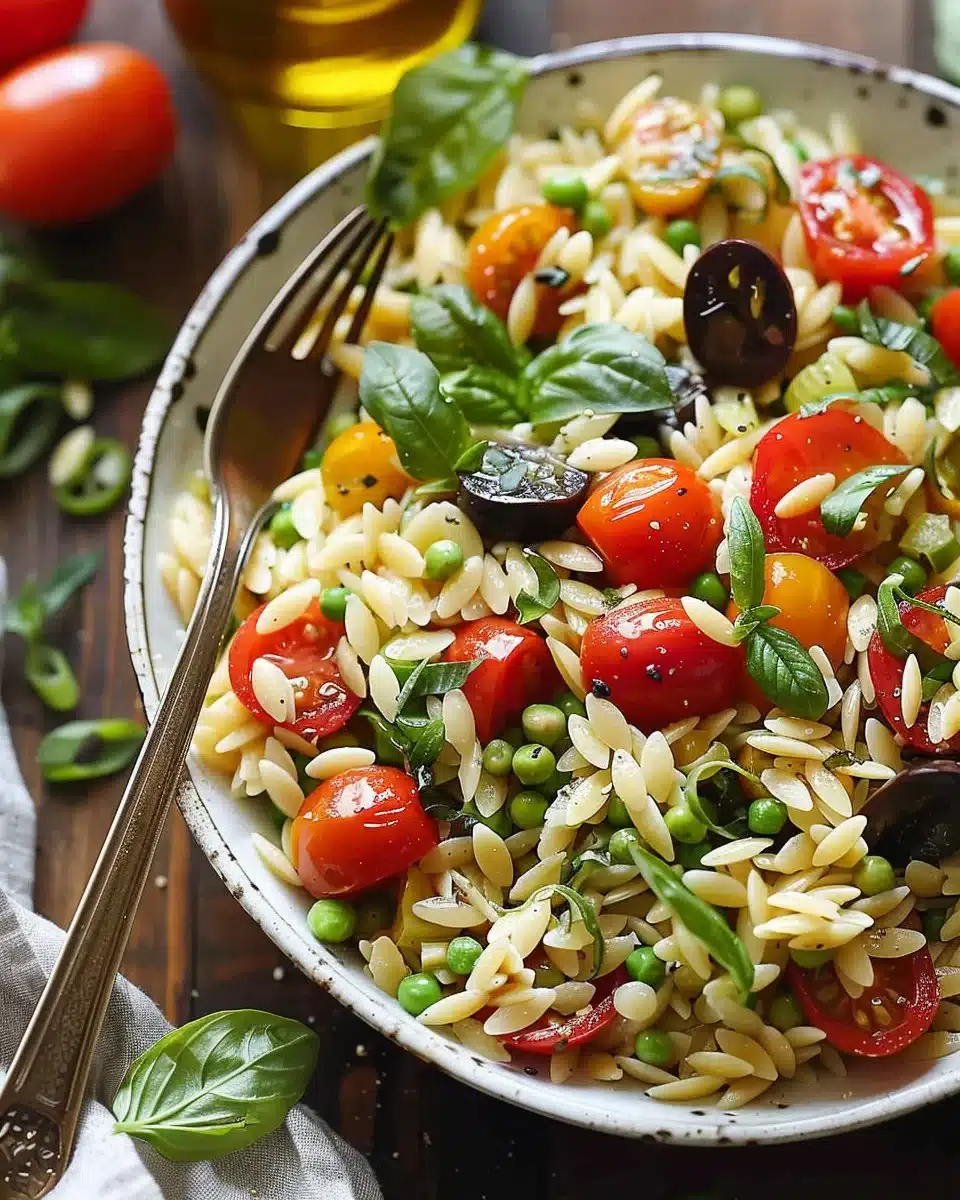
Ingredients
- 1 cup uncooked orzo
- 1/4 cup extra virgin olive oil
- 2 tablespoons freshly squeezed lemon juice
- 2 tablespoons balsamic vinegar
- 1 tablespoon Dijon mustard (or more)
- 1/2 teaspoon dried oregano (or Italian seasoning)
- 1/4 teaspoon salt
- Freshly ground black pepper (to taste)
- 10 oz cherry or grape tomatoes (red and yellow) — sliced in half
- 2 medium cucumbers — quartered
- 1/3 cup pitted black olives — sliced
- 1/3 cup pitted green olives — sliced (I used Castelvetrano olives)
- 4 oz crumbled feta cheese
- 2 oz baby spinach
Ingredient notes and substitutions:
- Orzo: Use whole-wheat orzo for more fiber, or a gluten-free orzo-style pasta if needed. Cook to al dente so the pasta stays firm in the salad.
- Olive oil: Use extra virgin for flavor, but light olive oil works if you prefer a milder taste.
- Lemon and balsamic: Both add acidity. If you prefer less balsamic sweetness, increase lemon juice and reduce balsamic.
- Mustard: Dijon helps emulsify the dressing; use more or less to taste, or substitute whole-grain mustard for texture.
- Olives and feta: These are the main salty components. For a lower-sodium version, reduce the olives or choose a reduced-sodium feta.
- Spinach: Baby spinach can be swapped for arugula, baby kale, or mixed greens for a different texture and flavor.
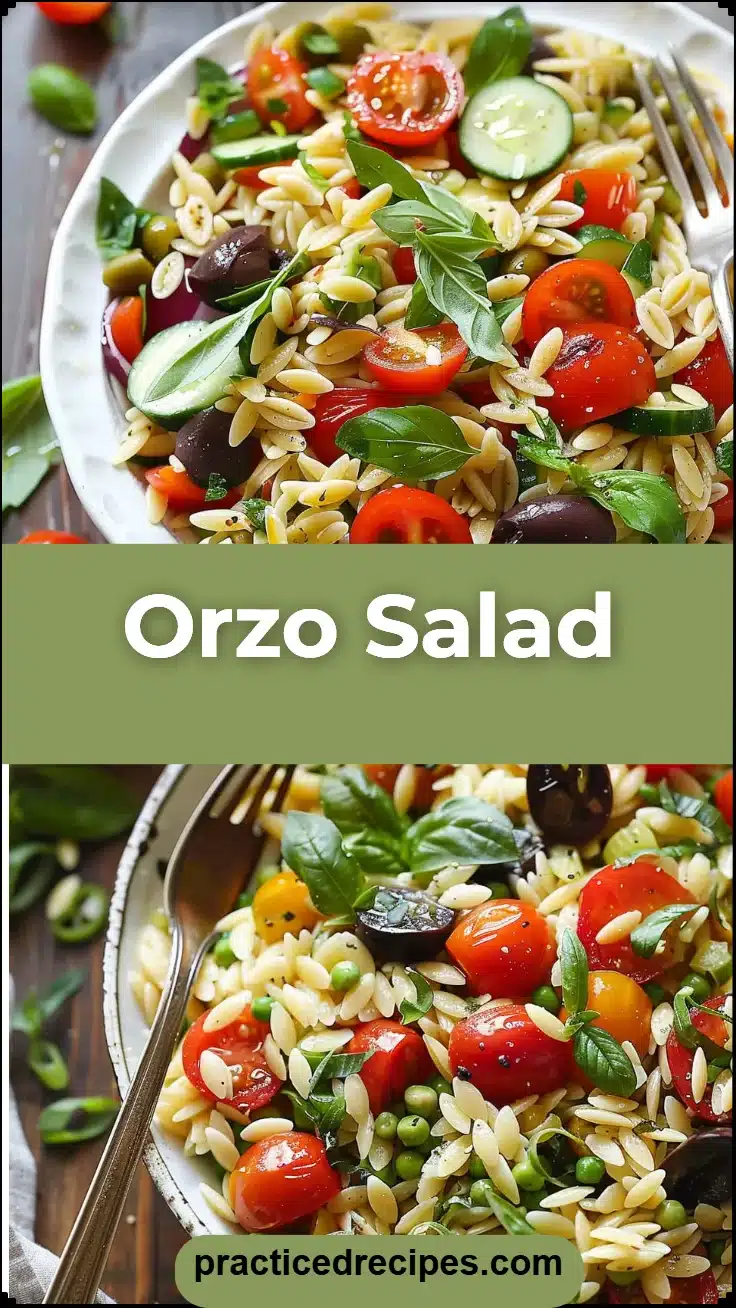
Directions
- Cook the orzo: Bring a medium pot of salted water to a boil. Add the orzo and cook according to package instructions until al dente (usually 8–10 minutes). Drain the orzo and run briefly under cool water to stop the cooking. Toss with a teaspoon of olive oil to prevent sticking.
- Make the dressing: In a small bowl or jar, whisk together the extra virgin olive oil, lemon juice, balsamic vinegar, Dijon mustard, dried oregano, salt, and freshly ground black pepper. Whisk until the dressing is emulsified. Taste and adjust the seasoning—add a little more mustard to thicken or a pinch more salt if needed.
- Assemble the salad: Place the cooked orzo in a large mixing bowl. Add the halved cherry tomatoes, quartered cucumbers, sliced black and green olives, crumbled feta, and baby spinach. Pour the dressing over the ingredients and toss gently until everything is evenly coated. Let the salad sit at room temperature for 10–15 minutes to allow flavors to meld before serving, or chill for an hour for a cooler salad.
Pro Tips for Success Orzo Salad
- Rinse lightly after cooking: Rinsing cooked orzo with cool water stops the cooking and cools the pasta for a salad. Toss with a small drizzle of olive oil afterward to prevent clumping.
- Keep textures balanced: Don’t over-slice the cucumbers or tomatoes. Larger pieces give contrast to the small orzo shape and make the salad more satisfying.
- Dress while warm: Tossing the orzo with the dressing while it’s still slightly warm helps the grains absorb flavor. If you prefer a cold salad, cool the pasta first and add the dressing right before serving.
- Taste and adjust: Dressings are personal—start with the amounts listed, then add more lemon for brightness, more balsamic for sweetness, or more mustard for tang as needed.
- Use good feta: A crumbly, tangy feta makes a big difference here. If the feta is very salty, rinse it quickly or reduce added salt in the dressing.
- Prep ahead smartly: Cook the orzo and store it separately from the dressing and vegetables if you’re making this more than a few hours ahead. Combine just before serving to keep the spinach crisp.
Flavor Variations Orzo Salad
- Mediterranean herb twist: Add chopped fresh parsley, mint, and a little dill. Replace some of the lemon juice with red wine vinegar and add a teaspoon of capers for extra briny bite.
- Roasted vegetable orzo: Roast diced bell peppers, zucchini, and red onion with a little olive oil and toss them in place of the raw cucumbers for a warm, smoky layer.
- Creamy avocado version: Reserve half the dressing, mash a ripe avocado with a tablespoon of lemon juice and a spoonful of Greek yogurt or mayonnaise, then fold into the orzo for a creamier texture.
- Protein boost: Stir in flaked canned tuna, chickpeas, or leftover shredded chicken (or smoked turkey) for a more filling main-dish salad.
- Pesto swap: Use a light basil pesto in place of part of the dressing for a herb-forward variation that’s great with extra cherry tomatoes and shaved Parmesan.
Serving Suggestions Orzo Salad
- Picnic or potluck: Serve this salad chilled in a large bowl with a garnish of fresh herbs. It pairs well with grilled vegetables, flatbreads, or a platter of cheeses.
- Weeknight dinner: Plate as a base and top with warm roasted salmon, grilled shrimp, or slices of seared tofu to make an easy entrée.
- Lunchbox-friendly: Pack in a shallow container with a lemon wedge on the side. Add a separate small container of extra dressing if you plan to eat it later to keep spinach crisp.
- Side for Mediterranean mains: This salad complements dishes like roasted lamb meatballs, roasted lemon chicken, or eggplant dishes. Its acidity and salt level help cut through richer mains.
Storage and Freezing Instructions Orzo Salad
- Refrigerator: Store leftover salad in an airtight container for up to 3–4 days. Note that the spinach and tomatoes may soften over time and the orzo will continue to absorb dressing. If storing for more than a day, consider keeping the dressing separate and tossing just before serving.
- Freezing: This salad is not ideal for freezing. The texture of cucumbers, tomatoes, and spinach becomes watery and mushy when frozen and thawed. If you must freeze a version of this salad, remove delicate vegetables and add them fresh after thawing, or just freeze cooked orzo to use later in freshly made salads.
- Reviving leftovers: If the salad has absorbed too much dressing, refresh it with a squeeze of lemon, a drizzle of olive oil, and a handful of fresh spinach. For a firmer bite, serve at room temperature rather than cold.
Nutrition Facts (Per Serving) — Approximate
Makes about 4 servings. These values are estimates and will vary by brand and ingredient specifics.
- Calories: ~440 kcal
- Protein: ~10–11 g
- Carbohydrates: ~39–42 g
- Fat: ~22–24 g
- Fiber: ~3.5–4 g
- Sodium: ~575–650 mg
Notes on nutrition: The largest calorie contributors are the orzo, olive oil, and feta. To lower calories or fat, reduce the olive oil to 2 tablespoons and use a reduced-fat feta or less cheese. To lower sodium, rinse the olives, use a lower-sodium feta, or omit added table salt.
FAQ About Orzo Salad
How long does homemade orzo salad last in the fridge?
Homemade orzo salad will keep well in the refrigerator for about 3–4 days when stored in an airtight container. The exact shelf life depends on how fresh your ingredients were when you assembled the salad. Vegetables like cucumbers and tomatoes will gradually soften and release moisture over time, which can make the salad a bit soggy; storing dressing separately can help maintain texture longer.
Can I make this salad ahead of time for a party?
Yes — you can prep most components in advance to make hosting easier. Cook the orzo and store it in the refrigerator, make the dressing ahead of time, and chop vegetables and olives. Combine everything about 30 minutes before serving to let flavors meld, or toss and refrigerate if you’re short on time. Keep in mind that delicate greens and tomatoes are best added just before serving if you want the freshest texture.
What can I substitute for feta if someone is allergic to dairy?
If someone needs a dairy-free option, substitute cubed marinated tofu, chopped roasted red pepper, or a sprinkling of toasted pine nuts to add texture and a savory bite. Nutritional yeast can also add a slightly cheesy, umami note without dairy. Choose lower-sodium olives for additional salty flavor if needed.
Is orzo salad good warm or cold?
Orzo salad is versatile and enjoyable both warm and cold. Tossing the salad while the orzo is still slightly warm allows the pasta to absorb more dressing, giving a juicy, flavorful result. Chilled orzo salad is refreshing on hot days and is ideal for picnics or meal prep. Decide based on your preference and serving situation.
How can I make this recipe lower in sodium?
To reduce sodium, use fewer olives or swap for low-sodium olive varieties, rinse standard olives briefly under water, choose a reduced-sodium or less-salty feta, and reduce added table salt in the dressing. You can also boost flavor with fresh herbs, lemon zest, and garlic to compensate for less salt.
Can I add protein to make this a main dish?
Absolutely. Add grilled chicken, seared shrimp, roasted chickpeas, flaked salmon, or cubed smoked turkey to transform the salad into a satisfying main course. Store proteins separately if making ahead, then combine just before serving for the best texture and flavor.
Can I use other greens besides baby spinach?
Yes. Baby arugula gives peppery notes, baby kale holds up well for longer storage, and mixed baby greens offer variety. If using heartier greens like kale, massage them with a bit of dressing or lemon to soften them before combining with the pasta.
What’s the best way to keep the salad from becoming soggy?
To avoid sogginess: toss the cooked orzo with a little oil after rinsing, add juicy components like tomatoes and cucumbers just before serving or salt them lightly and drain excess liquid, and consider storing dressing separately until serving if you’re prepping far ahead. Also avoid over-chopping ingredients; larger pieces tend to release less water.
Final Thoughts
Orzo Salad is a flexible, flavorful dish that’s easy to adapt for seasons, diets, and occasion. With just a few quality ingredients and a simple dressing, you’ll have a crowd-pleasing salad that’s great for meal prep, potlucks, or a quick family dinner. Try the variations and tips above to make the recipe your own, and enjoy the bright, Mediterranean-inspired combo of tangy dressing, briny olives, and creamy feta.
Print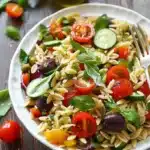
Orzo Salad
- Total Time: 25 minutes
- Yield: 4 servings
- Diet: Vegetarian
Description
A bright, easy-to-make Orzo Salad featuring tender orzo pasta, crisp vegetables, briny olives, tangy feta, and a simple lemon-balsamic dressing.
Ingredients
- 1 cup uncooked orzo
- 1/4 cup extra virgin olive oil
- 2 tablespoons freshly squeezed lemon juice
- 2 tablespoons balsamic vinegar
- 1 tablespoon Dijon mustard (or more)
- 1/2 teaspoon dried oregano (or Italian seasoning)
- 1/4 teaspoon salt
- Freshly ground black pepper (to taste)
- 10 oz cherry or grape tomatoes (red and yellow) — sliced in half
- 2 medium cucumbers — quartered
- 1/3 cup pitted black olives — sliced
- 1/3 cup pitted green olives — sliced
- 4 oz crumbled feta cheese
- 2 oz baby spinach
Instructions
- Cook the orzo according to package directions in salted water until al dente. Drain and rinse briefly with cool water to stop the cooking; toss with a splash of olive oil to keep it from sticking.
- Make the dressing by whisking together extra virgin olive oil, freshly squeezed lemon juice, balsamic vinegar, Dijon mustard, dried oregano, salt, and freshly ground black pepper. Taste and adjust acidity or seasoning as needed.
- Assemble the salad: in a large bowl, combine the cooked orzo, halved cherry tomatoes, quartered cucumbers, sliced black and green olives, crumbled feta, and baby spinach. Pour the dressing over the salad and toss gently until everything is evenly coated.
- Let the salad sit for 10–15 minutes to allow flavors to meld, then serve or chill.
Notes
This salad is very adaptable; feel free to swap in your favorite seasonal vegetables or add proteins like grilled chicken to enhance heartiness.
- Prep Time: 15 minutes
- Cook Time: 10 minutes
- Category: Salad
- Method: No Cooking
- Cuisine: Mediterranean