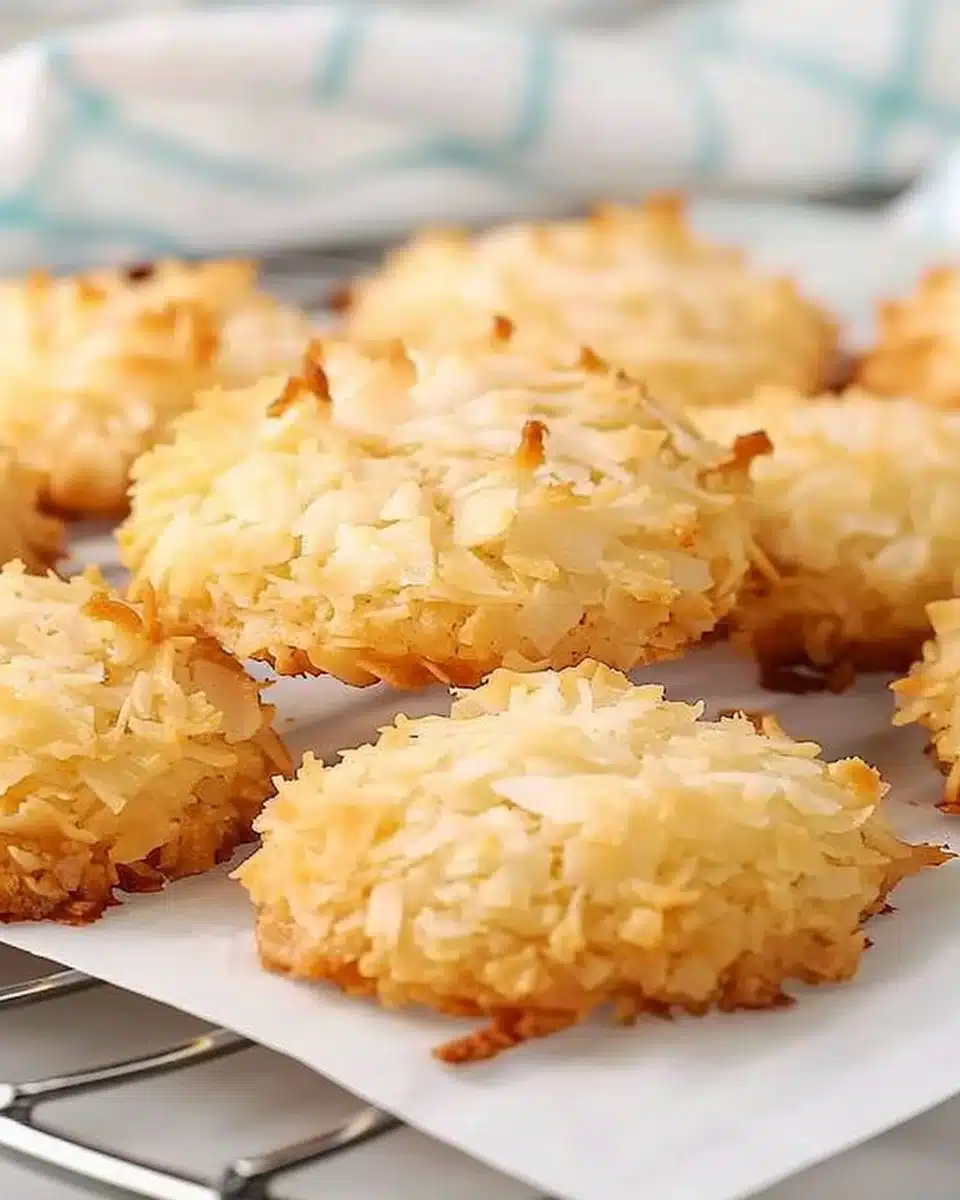
Coconut Cookies Recipe is a delightful, simple way to bring tropical flavor and crisp, buttery texture to your cookie jar. These coconut-studded cookies are approachable for home bakers, versatile for flavor tweaks, and perfect for gifting, snacking, or pairing with coffee. If you like chewy centers with lightly golden edges and a toasted coconut finish, this recipe quickly becomes a favorite in any kitchen. For ideas on how to make cookies heartier or higher in protein, check out this collection of protein cookie recipes that can inspire swaps and additions.
Why make this recipe
Coconut cookies offer a few big advantages that make them worth baking again and again. First, they use pantry-friendly ingredients that are easy to keep on hand, so you can mix a batch without a special trip to the store. Second, the texture contrast—soft interior, slightly crisp edges, and toasted coconut on the outside—delivers an enjoyable bite that suits many tastes. Third, the recipe is flexible: you can tweak the coconut amount, swap sugars, or add chocolate, citrus, or nuts to make the cookies your own. Finally, these cookies are a crowd-pleaser for gatherings and simple to portion for sharing or freezing, which makes them practical for busy households.
How to make Coconut Cookies Recipe
This section walks through the method behind the recipe, step by step, with notes to help you get reliable results. Read the whole section before starting so you can prepare equipment and chilling time.
- Prepare your workspace. Line two large baking sheets with parchment paper and set them nearby. Preheat the oven later in the process so the dough can chill first—this helps cookies hold their shape and improves texture.
- Mix the dry ingredients. In a medium bowl whisk together 1½ cups (180 g) all-purpose flour, ½ teaspoon salt, ¼ teaspoon baking soda, and ½ teaspoon baking powder. Whisking distributes the leaveners and salt evenly through the flour so the cookies bake consistently.
- Cream the butter and sugars. In a large bowl, beat ¾ cup (170 g) unsalted butter (softened), ½ cup (100 g) light brown sugar, and ½ cup (100 g) white sugar until the mixture is light and fluffy. This step traps air that helps the cookies rise slightly and gives a tender crumb.
- Add the wet ingredients. Mix in 1 large egg (room temperature) and 2 teaspoons vanilla extract until combined. Scrape the bowl so everything is evenly incorporated.
- Combine wet and dry. Add the dry ingredient mixture and 1½ cups shredded coconut (from the divided 2 cups). Mix until just combined—overmixing develops gluten and can make cookies tough. Fold gently until no streaks of flour remain.
- Shape and coat the dough. Scoop dough using a cookie scoop or tablespoon and roll into balls. Roll the tops of each dough ball in the remaining ½ cup (40 g) shredded coconut so the coconut sticks to the surface for a toasted finish when baked.
- Arrange the cookies. Place dough balls on baking sheets spaced about 2 inches apart to allow spreading.
- Chill before baking. Chill the trays for 30 minutes in the refrigerator. Chilling firms the butter and prevents excessive spread, resulting in a thicker cookie with a chewier center.
- Preheat and bake. Preheat the oven to 350°F (175°C), or 320°F for convection ovens. Bake the cookies for 13–15 minutes until the edges are golden but the centers still look slightly soft.
- Cool. Allow cookies to cool on the baking sheets for 15 minutes to set, then transfer to wire racks to cool completely.


Ingredients
- 1½ cups (180 g) all-purpose flour
- ½ tsp salt
- ¼ tsp baking soda
- ½ tsp baking powder
- ¾ cup (170 g) unsalted butter, softened
- ½ cup (100 g) light brown sugar
- ½ cup (100 g) white sugar
- 1 large egg, room temp
- 2 tsp vanilla extract
- 2 cups (160 g) unsweetened shredded coconut (divided)
Ingredient notes and substitutions
- Butter: Use unsalted butter so you can control salt. If you only have salted butter, reduce added salt to a pinch. For a dairy-free option, replace butter with a vegan baking stick (check ratio and texture) or chilled coconut oil—but note this may give a different texture and a stronger coconut flavor.
- Sugars: The brown sugar contributes moisture and caramel notes; if you only have white sugar, use it alone but expect a slightly crisper cookie and less depth of flavor. For lower sugar, reduce total sugar by up to 15% but expect a drier, less tender cookie.
- Egg: The egg binds the dough and adds tenderness. For an egg-free version, try a commercial egg replacer or 1–2 tablespoons of applesauce plus a tablespoon of neutral oil—results will be less rich and slightly cakier.
- Flour: All-purpose flour is recommended. For a more tender cookie you can try half all-purpose and half cake flour, but measure carefully and expect slightly different spread.
- Coconut: Unsweetened shredded coconut gives texture without extra sweetness. Sweetened coconut will increase sweetness and can brown faster; if using sweetened, reduce white sugar by 2–3 tablespoons.
Directions
- Line two large baking sheets with parchment paper.
- Whisk flour, salt, baking soda, and baking powder in a bowl until combined.
- In a large bowl, cream butter, light brown sugar, and white sugar until fluffy and lighter in color.
- Add the egg and vanilla. Mix until just combined and scrape down the sides of the bowl.
- Add the dry ingredients and 1½ cups shredded coconut. Mix until just combined—do not overmix.
- Scoop dough into even portions and roll the tops in the extra ½ cup shredded coconut so the coconut adheres to the outside.
- Place dough balls on the prepared baking sheets, spaced about 2 inches apart.
- Chill trays for 30 minutes in the fridge to firm up the dough.
- Preheat oven to 350°F (or 320°F for convection) while the dough chills.
- Bake for 13–15 minutes until the edges are golden and the centers are set but still soft.
- Cool on the trays for 15 minutes, then transfer to wire racks to cool completely.
Pro Tips for Success Coconut Cookies Recipe
- Soften butter correctly: Let butter sit at room temperature until it yields slightly when pressed but is not oily. Overly soft butter will make the dough greasy and cause excessive spread.
- Measure flour properly: Scoop and level with a knife or weigh it. Too much flour can make cookies dry; too little makes them flat and fragile.
- Chill the dough: The 30-minute chill before baking helps the cookies maintain shape, concentrate flavor, and produce a chewier center with a nicely browned edge.
- Watch the bake time closely: Ovens vary—start checking at 12 minutes. Cookies continue to firm on the hot sheet, so remove when edges are golden and centers are just set.
- Toast coconut for extra depth: If you love toasted flavor, gently toast the shredded coconut in a dry skillet until golden before adding it to the dough. Keep some untoasted to roll the dough in for contrast.
- Keep sizes uniform: Use a medium cookie scoop (about 1.5 tablespoons) for even baking and consistent yield.
Flavor Variations Coconut Cookies Recipe
- Chocolate chip coconut cookies: Fold ¾ cup of mini chocolate chips into the dough for a classic combo—the coconut and chocolate play beautifully together.
- Lime or lemon zest: Add 1–2 teaspoons of fresh lime or lemon zest for a bright, citrusy lift that pairs well with coconut’s sweetness.
- Almond and honey: Replace ¼ cup of the flour with finely ground almonds and swap part of the white sugar for 2 tablespoons of honey to introduce a nutty, floral undertone.
- Macaroon-style: For an extra-coconut, chewier cookie, replace ½ cup of flour with an additional ½ cup shredded coconut and reduce baking time slightly.
- Tropical mix: Add ¼ cup chopped dried pineapple or mango and 2 tablespoons chopped macadamia nuts for a party-style cookie with more texture.
Serving Suggestions Coconut Cookies Recipe
These coconut cookies are versatile at the table. Enjoy them warm from the oven with a glass of cold milk or a cappuccino for a cozy pairing. Stack a few between slices of banana or pineapple for a simple mini dessert, or sandwich them with a smear of lemon curd, chocolate ganache, or vanilla buttercream for an elevated treat. They also work well crumbled over vanilla ice cream as nuts or cookie crumble. For parties, arrange them on a platter with dusted powdered sugar and toasted coconut flakes for a pretty presentation.
Storage and Freezing Instructions Coconut Cookies Recipe
- Room temperature: Store cooled cookies in an airtight container for up to 4 days. Place a sheet of parchment between layers to keep them from sticking.
- Refrigerator: For slightly firmer cookies and longer freshness, store in the fridge for up to 10 days in an airtight container.
- Freezing dough: Scoop dough onto a baking sheet, freeze until firm (about 1–2 hours), then transfer dough balls to a freezer bag or airtight container. Freeze for up to 3 months. Bake from frozen, adding 1–2 minutes to the baking time.
- Freezing baked cookies: Freeze baked and fully cooled cookies in a single layer on a tray until solid, then transfer to a freezer-safe container. Reheat at 300°F for 5–7 minutes or let thaw at room temperature. Proper storage helps preserve texture and flavor.
Nutrition Facts (Per Serving)
Estimated nutrition values are for one cookie, assuming the recipe yields about 24 medium cookies. Actual values vary by ingredient brands and cookie size.
- Calories: 157 kcal
- Protein: 1.5 g
- Carbohydrates: 15.7 g
- Fat: 10.3 g
- Fiber: 1.3 g
- Sodium: 51 mg
These numbers are estimates; if you need precise nutrition information for dietary reasons, weigh portion sizes and use the specific nutrition labels for your ingredients.
FAQ About Coconut Cookies Recipe
What makes these cookies chewy instead of cakey?
Chewiness comes from a balance of fats and sugars and not overmixing the dough. The combination of brown sugar and white sugar provides moisture and structure: brown sugar adds moisture while white sugar contributes to crisping. Chilling the dough before baking helps keep the butter solid at first, reducing spread and encouraging a tender, chewy center. Finally, removing the cookies from the oven while the centers still look slightly underbaked lets them finish setting on the hot sheet for a softer interior.
Can I use sweetened shredded coconut instead of unsweetened?
Yes, you can use sweetened shredded coconut, but it will add extra sugar and contribute to faster browning. If you opt for sweetened coconut, consider reducing the white sugar by 2–3 tablespoons to keep the cookies balanced. Watch the cookies closely in the oven, as they may reach golden edges more quickly. The texture will be similar but subtly sweeter.
How do I prevent cookies from spreading too much?
Three main tactics help prevent excessive spread: chill the dough before baking to firm the butter, don’t use overly soft or melted butter when creaming, and measure flour accurately. If your kitchen is very warm, chilling the dough longer or placing the tray briefly in the freezer (10–15 minutes) can help. Using a higher ratio of flour will also reduce spread, but too much flour can make cookies dry—aim for balance.
Can I make these cookies gluten-free?
You can adapt this recipe with a gluten-free all-purpose flour blend that is designed to substitute 1:1 for wheat flour. Look for blends that contain xanthan gum or add ¼ teaspoon xanthan gum if your blend lacks it, which helps mimic gluten’s structure and binding. Texture may be slightly different—often denser or crumblier—so chill the dough and check baking times carefully. Using almond or oat flour requires more adjustment and is not a straight swap.
Why should I chill the dough before baking?
Chilling firms the butter and so slows spread when the dough hits the oven’s hot surface. This leads to a thicker cookie with a chewy center and nicely browned edges. Chilling also helps ingredients hydrate and meld flavors, improving overall taste. Even a short 30-minute chill makes a noticeable difference in texture and shape.
Can I add mix-ins like nuts or chocolate?
Absolutely. Fold in up to 1 cup of mix-ins without compromising dough structure—mini chocolate chips, chopped macadamia nuts, toasted almonds, or dried fruit all work well. Keep mix-ins relatively small so the cookies maintain a consistent shape and bake evenly. If adding very moist elements (like fresh fruit), reduce other wet ingredients or bake slightly longer.
How do I tell when the cookies are done?
Look for golden edges and centers that still appear slightly soft or glossy—cookies will continue to firm up on the hot pan after you remove them from the oven. If the centers are very pale and wet, they need more time; if the whole cookie is deeply golden, it may be overbaked and crisp rather than soft. For these coconut cookies, 13–15 minutes is typical, but oven variance and cookie size can change that window.
What’s the best way to toast coconut?
To toast shredded coconut, spread an even layer in a dry skillet over medium-low heat. Stir or shake frequently so it browns evenly—this takes just a few minutes. Alternatively, spread coconut on a baking sheet and bake at 325°F (160°C) for 5–8 minutes, stirring halfway through. Watch closely, as coconut can go from golden to burned quickly. Toasted coconut adds warmth and a nutty flavor that enhances the cookies.
Final Thoughts
These coconut cookies are a friendly, adaptable recipe that rewards small technique choices like chilling the dough and watching bake time. They balance ease and flavor, making them a great everyday bake or a small-batch delight for sharing. Experiment with the suggested variations to find your ideal version—whether that’s with chocolate, citrus, or extra toasted coconut. Keep a stash of dough balls in the freezer for quick treats on demand: a warm, coconut-scented cookie is only minutes away whenever the craving hits.
Print
Coconut Cookies
- Total Time: 45 minutes
- Yield: 24 cookies
- Diet: Vegetarian
Description
Delightful, chewy coconut cookies with a crisp edge and toasted finish, perfect for snacking or gifting.
Ingredients
- 1½ cups (180 g) all-purpose flour
- ½ tsp salt
- ¼ tsp baking soda
- ½ tsp baking powder
- ¾ cup (170 g) unsalted butter, softened
- ½ cup (100 g) light brown sugar
- ½ cup (100 g) white sugar
- 1 large egg, room temperature
- 2 tsp vanilla extract
- 2 cups (160 g) unsweetened shredded coconut (divided)
Instructions
- Line two large baking sheets with parchment paper.
- Whisk together the flour, salt, baking soda, and baking powder in a bowl until combined.
- Cream the butter, light brown sugar, and white sugar in a large bowl until fluffy and lighter in color.
- Add the egg and vanilla. Mix until just combined and scrape down the sides of the bowl.
- Add the dry ingredients and 1½ cups shredded coconut. Mix until just combined—do not overmix.
- Scoop dough into even portions and roll the tops in the extra ½ cup shredded coconut so the coconut adheres to the outside.
- Place dough balls on the prepared baking sheets, spaced about 2 inches apart.
- Chill the trays for 30 minutes in the refrigerator to firm up the dough.
- Preheat oven to 350°F (or 320°F for convection) while the dough chills.
- Bake for 13–15 minutes until the edges are golden and the centers are set but still soft.
- Cool on the trays for 15 minutes, then transfer to wire racks to cool completely.
Notes
For a chocolate chip version, fold in mini chocolate chips. Experiment with citrus zest or nuts for additional flavors.
- Prep Time: 15 minutes
- Cook Time: 15 minutes
- Category: Dessert
- Method: Baking
- Cuisine: American