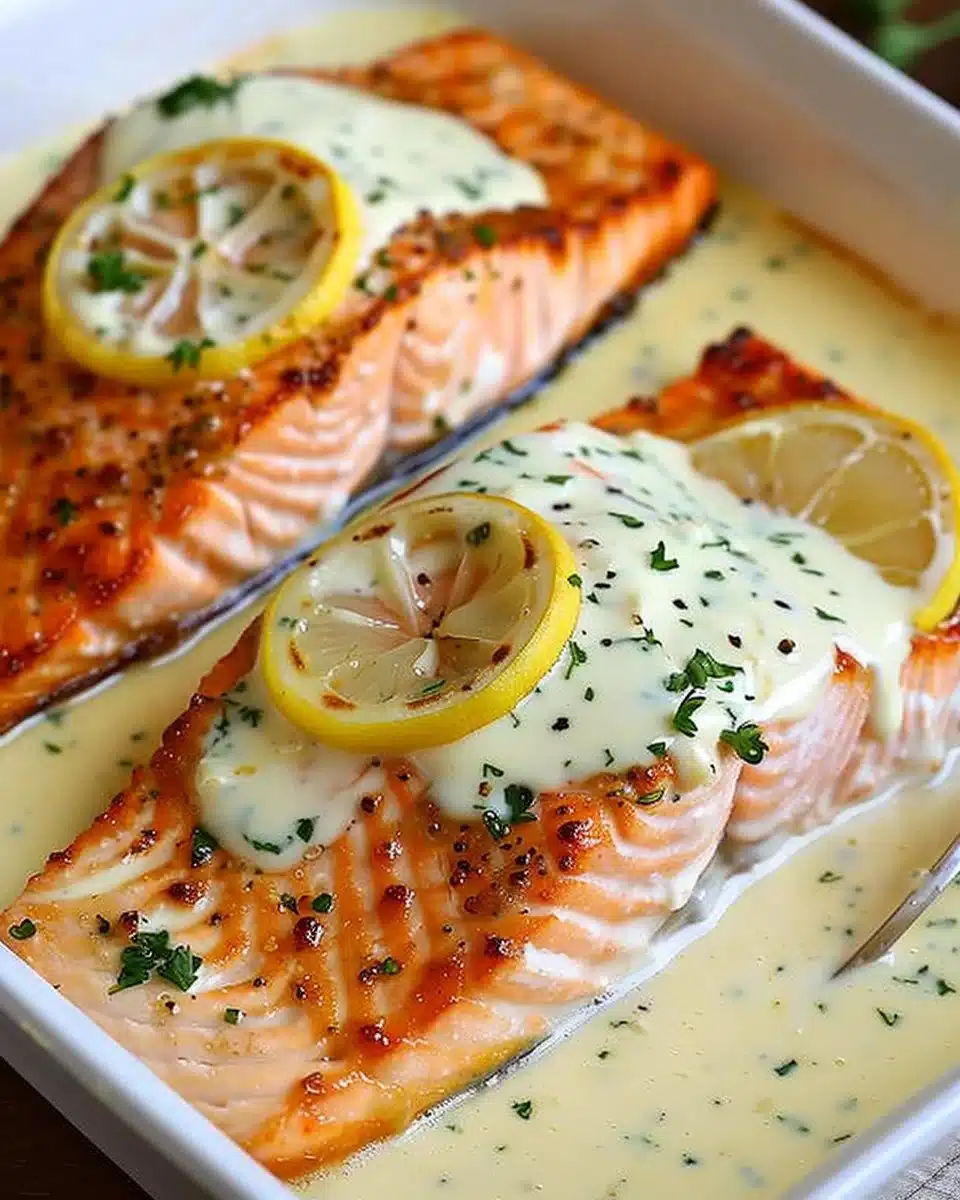
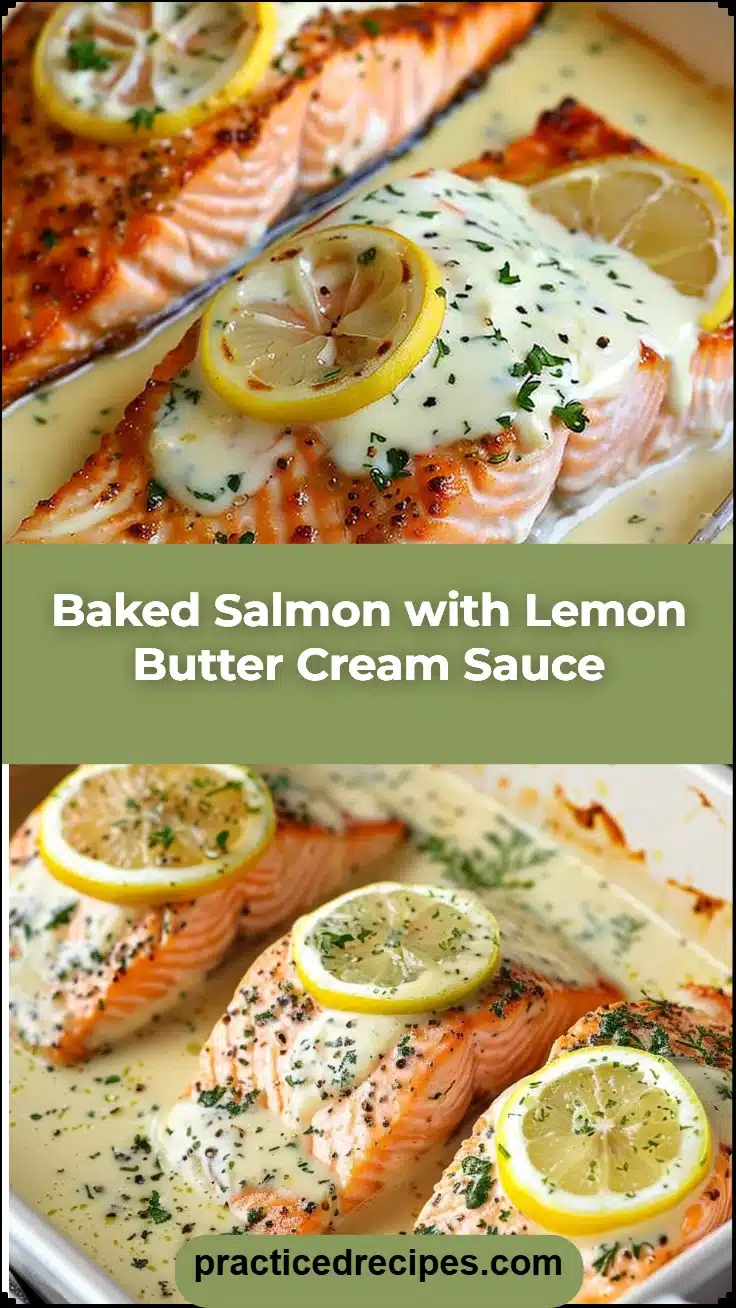
Baked Salmon with Lemon Butter Cream Sauce is a perfect weeknight or special-occasion dinner that tastes luxurious without requiring hours in the kitchen. If you love creamy, bright seafood dishes, you might also enjoy a similar take on white fish in this baked cod in coconut lemon cream sauce for another creamy seafood option.
Baked Salmon with Lemon Butter Cream Sauce
Why make Baked Salmon with Lemon Butter Cream Sauce
Salmon is one of the most versatile, nutrient-dense proteins you can cook at home, and this Baked Salmon with Lemon Butter Cream Sauce turns it into a restaurant-worthy meal with very little fuss. The lemon and butter cream sauce gives the rich salmon a bright, silky finish — it’s both comforting and fresh. This recipe is ideal when you want an elegant plate without deep frying or complicated techniques, and it works well for family dinners, date nights, or quick entertaining.
Beyond flavor, this dish is practical: the oven does most of the work, the sauce can be made while the fish bakes, and the ingredients are common staples in many kitchens. If you’re trying to eat more omega-3-rich fish or want a simple way to impress guests, this recipe is a great place to start.
How to make Baked Salmon with Lemon Butter Cream Sauce
This method keeps the salmon moist and flaky while delivering a smooth, lemony cream sauce that clings to each fillet. Start by preheating the oven and seasoning the fish. While the salmon bakes, whisk together a quick lemon butter cream sauce on the stovetop. Spoon the sauce over the baked fillets, garnish, and serve immediately. The timing is designed so the sauce is ready just as the salmon comes out of the oven — no reheating needed.
Ingredients :
- 4 salmon fillets (6 oz each)
- 2 tbsp olive oil
- 3 garlic cloves (minced)
- Salt and pepper to taste
- 1/4 cup (60 ml) fresh lemon juice
- Zest of 1 lemon
- 1/2 cup (120 ml) heavy cream
- 1/4 cup (60 g) unsalted butter
- 2 tbsp chopped fresh parsley or dill
Ingredient Notes:
- Salmon: Choose fillets about 6 ounces each for even cooking. Skin-on fillets can be used; place them skin-side down. If you prefer a skinless portion, pat it very dry before seasoning.
- Olive oil: Use a good-quality extra-virgin olive oil for flavor, or a neutral oil if you prefer.
- Heavy cream: If you want a lighter sauce, substitute half-and-half thinned with a tablespoon of flour for a similar thickness, or use full-fat coconut milk for a dairy-free option (this will shift the flavor profile slightly). Greek yogurt can be used off-heat as a tangy, lower-fat finish — whisk in a small amount of warm sauce to temper before stirring into the sauce to avoid curdling.
- Butter: For a dairy-free swap, use a plant-based butter alternative. Unsalted butter gives you more control over seasoning.
- Lemon: Fresh lemon juice and zest are important for brightness; bottled juice won’t give the same fresh flavor.
- Herbs: Parsley is classic and mild; dill adds a more briny, complementary note. Both are delicious — choose based on your preference.
- Salt: Adjust to taste; fish benefits from a moderate amount of salt to bring out flavors. If using salted butter, reduce added salt accordingly.
Directions :
- Preheat the Oven: Preheat your oven to 375°F (190°C). Lightly grease a baking dish or line a sheet pan with parchment paper.
- Prepare the Salmon: Pat the salmon fillets dry with a paper towel. Place them in the prepared baking dish. Drizzle with olive oil and season with salt, pepper, and half of the minced garlic.
- Bake the Salmon: Bake in the preheated oven for 12–15 minutes, or until the salmon is cooked through and flakes easily with a fork. Timing may vary slightly depending on fillet thickness; aim for an internal temperature of 125–130°F (52–54°C) for medium-rare to medium, which gives a tender, moist texture.
- Make the Lemon Butter Cream Sauce: While the salmon is baking, melt butter in a small saucepan over medium heat. Add the remaining garlic and sauté for 1 minute until fragrant. Stir in the lemon juice and zest.
- Reduce the heat to low and whisk in the heavy cream. Let it simmer gently for 2–3 minutes, stirring occasionally.
- Combine and Serve: Once the salmon is done, remove it from the oven and spoon the lemon butter cream sauce over each fillet. Garnish with fresh parsley or dill and serve immediately.
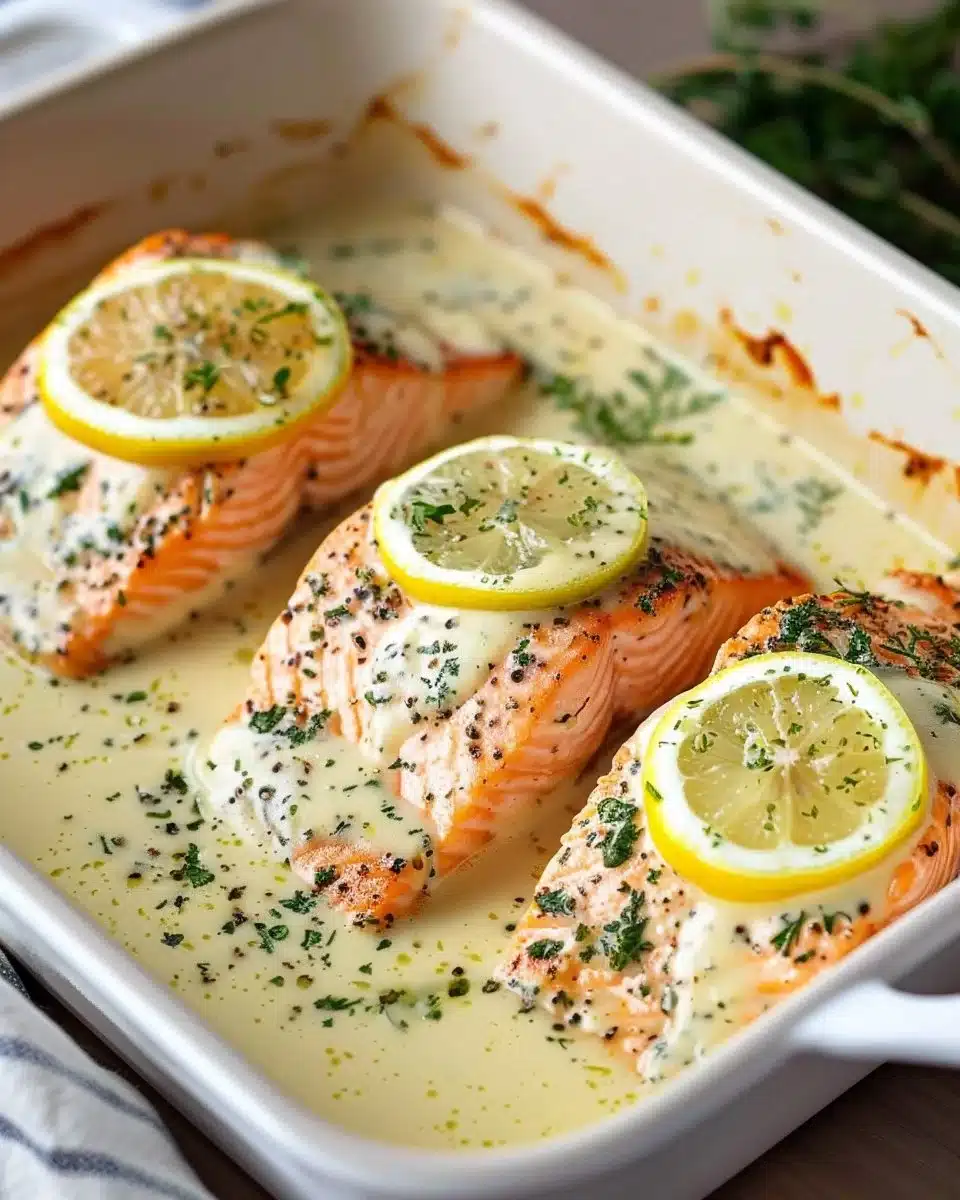
Pro Tips for Success Baked Salmon with Lemon Butter Cream Sauce
- Dry the fish well: Patting the salmon dry before seasoning helps the flesh brown slightly and prevents excess moisture in the oven.
- Even fillets = even cooking: Choose fillets that are similar in thickness or trim thicker ends to ensure all pieces finish at the same time.
- Watch the oven time: Salmon cooks quickly. Start checking for doneness at about 10–12 minutes for thin fillets and 13–15 for thicker ones. Overcooking makes salmon dry and less flavorful.
- Finish the sauce gently: Keep the heat low once you add the cream to avoid boiling, which can cause separation. A gentle simmer thickens the sauce without breaking it.
- Taste and adjust: After whisking in the cream, taste the sauce and add salt, pepper, or more lemon if needed. A touch of lemon brightens heavy cream beautifully.
- Rest briefly: Let the salmon rest for a minute after removing it from the oven so juices redistribute; then spoon sauce on top.
Flavor Variations Baked Salmon with Lemon Butter Cream Sauce
- Garlic and Herb: Stir additional chopped fresh herbs like chives, tarragon, or basil into the cream sauce for a garden-fresh twist. Tarragon works especially well with cream and salmon.
- Dijon Mustard Twist: Whisk a teaspoon or two of Dijon mustard into the cream for a tangy, savory lift that pairs nicely with lemon.
- Capers and White Wine Substitute: Add a tablespoon of capers to the sauce for briny pops. If you like the flavor of wine sauces, replace 2 tablespoons of the lemon juice with low-sodium vegetable or chicken broth to get depth without alcohol.
- Creamy Tomato: Stir in a couple of tablespoons of tomato paste or a spoonful of sun-dried tomato purée to add a slightly sweet, savory color variation that marries well with cream and lemon.
- Spicy Lemon: Add a pinch of red pepper flakes to the sautéed garlic for a warming contrast that brightens the butter and cream.
Serving Suggestions Baked Salmon with Lemon Butter Cream Sauce
This salmon recipe pairs beautifully with simple sides that soak up the sauce and complement the richness of the fish. Consider serving with:
- Steamed or roasted vegetables: Asparagus, green beans, broccoli, or roasted carrots are classic companions. Lightly toss them in olive oil, salt, and lemon before roasting for a cohesive plate.
- Starches: A bed of creamy mashed potatoes, garlic mashed cauliflower, or herb buttered rice will catch every bit of the cream sauce. Try lemon-parmesan risotto for an elevated option.
- Light grains: Quinoa, couscous, or farro dressed with a splash of olive oil and herbs provides a nutty counterpoint and adds texture.
- Simple salad: A crisp green salad with vinaigrette or a fennel and orange salad can cut through the creaminess and refresh the palate.
- Bread: Crusty bread is ideal for mopping up extra sauce, especially if you’re serving this as a cozy dinner.
Storage and Freezing Instructions Baked Salmon with Lemon Butter Cream Sauce
Refrigerating:
- Cool quickly: Let any leftover salmon cool to room temperature no longer than two hours, then refrigerate in an airtight container. Store the fillets and sauce together or separately — separate is best for texture.
- Shelf life: Properly refrigerated, cooked salmon with cream sauce will keep for 2–3 days. The cream sauce can sometimes thicken or separate upon chilling; gentle reheating can help bring it back together.
Freezing: - Freeze with care: Fish texture changes when frozen, so freezing cooked salmon is possible but may slightly alter the texture. Place cooled salmon and sauce in a freezer-safe container, leaving some headspace, and freeze for up to 1 month for best quality.
- Thawing and reheating: Thaw in the refrigerator overnight. Reheat gently in a low oven (about 275–300°F / 135–150°C) until warmed through, or rewarm the sauce on the stovetop over low heat. If the sauce has separated, whisk in a splash of cream or a teaspoon of butter while gently heating. Avoid microwaving at full power to keep the salmon from drying out.
- Fresh is best: For peak texture and flavor, plan to eat this dish within a couple of days of cooking rather than frequently freezing it.
Nutrition Facts (Per Serving)
Approximate values (one serving = one 6 oz fillet with sauce). These are estimates and will vary by ingredient brands and exact portion sizes.
- Calories: ~700 kcal
- Protein: ~36 g
- Carbohydrates: ~3 g
- Fat: ~57 g
- Fiber: ~0.5 g
- Sodium: ~320 mg
Nutrition notes:
- Salmon is a great source of high-quality protein and omega-3 fatty acids.
- The cream and butter raise the fat and calorie counts; you can reduce these by using lighter cream alternatives or smaller amounts of butter if desired.
- If sodium is a concern, limit added salt and use unsalted butter, and avoid briny additions like capers or extra salt at the table.
FAQ About Baked Salmon with Lemon Butter Cream Sauce
How can I tell when my salmon is perfectly cooked?
Perfectly cooked salmon is opaque and flakes easily with a fork, but still moist. For more precision, use an instant-read thermometer — aim for an internal temperature of 125–130°F (52–54°C) for medium doneness that will continue to carryover cook slightly after you remove it from the oven. If you prefer fully firm salmon, cook to 140°F (60°C), but be aware it will be firmer and less moist.
Can I make the lemon butter cream sauce ahead of time?
Yes, you can make the sauce ahead and refrigerate it for up to 2 days. When reheating, warm it gently over low heat and whisk in a little cream or water if it seems too thick. Avoid boiling the sauce during reheating to prevent separation; if it separates, a brief whisking off the heat with a splash of warm liquid will usually bring it back together.
Is it safe to cook salmon from frozen with this method?
You can bake salmon from frozen, but it will take longer and the texture may be slightly different. To cook from frozen, add 8–12 minutes to the baking time at 375°F (190°C) and check the internal temperature. It’s best to thaw fillets in the refrigerator overnight for even cooking and the best sauce-to-fish ratio.
What are the best herbs to use with salmon and lemon cream sauce?
Parsley and dill are classic, but chives, tarragon, and basil are also excellent options. Tarragon brings a slightly licorice-like brightness that pairs very well with cream, while chives add a mild onion quality. Fresh herbs should be added at the end to keep their flavor bright.
How can I lighten this recipe without sacrificing flavor?
To reduce calories and fat, cut the butter by half and use lower-fat cream alternatives (such as a mixture of light cream and low-fat milk thickened with a small amount of cornstarch). You can also use plain Greek yogurt tempered with a bit of warm sauce for a creamier texture with more protein and less fat. Increase lemon zest and herbs to maintain brightness and flavor.
Can I grill the salmon instead of baking it?
Absolutely. Grilling works well and adds a smoky char that pairs nicely with the cream sauce. Grill over medium-high heat for 4–6 minutes per side, depending on thickness, and watch carefully to prevent overcooking. If you grill, spoon the warm sauce over the salmon just before serving.
Is this recipe kid-friendly?
Yes — most kids enjoy flaky salmon with a mild, creamy sauce. If you’re feeding children, reduce the amount of lemon zest or skip any spicy additions. Serve the fish with kid-friendly sides like mashed potatoes, rice, or steamed veggies to create a familiar plate.
How do I prevent the cream sauce from separating?
Keep the sauce over low heat after adding the cream and avoid bringing it to a hard boil. If you need to thicken it, reduce gently or whisk in a small slurry (a teaspoon of cornstarch mixed with a tablespoon of cold water) while stirring. If the sauce does separate, remove from heat and whisk in a splash of warm cream or butter; blending briefly with an immersion blender can also help emulsify it.
Final Thoughts
Baked Salmon with Lemon Butter Cream Sauce is a reliable, flavorful dish that balances richness with bright citrus notes and fresh herbs. It’s flexible enough to adapt to lighter or more decadent preparations and elegant enough to serve when you want to impress. With minimal hands-on time and a sauce that comes together while the fish bakes, this recipe is an easy way to elevate a simple fillet into a satisfying meal.
Enjoy this recipe as a weeknight treat or a centerpiece for a relaxed dinner party — it’s comforting, bright, and deliciously simple.
Print
Baked Salmon with Lemon Butter Cream Sauce
- Total Time: 25 minutes
- Yield: 4 servings
- Diet: Pescatarian
Description
A luxurious yet easy baked salmon topped with a bright lemon butter cream sauce, perfect for weeknight dinners or special occasions.
Ingredients
- 4 salmon fillets (6 oz each)
- 2 tbsp olive oil
- 3 garlic cloves (minced)
- Salt and pepper to taste
- 1/4 cup (60 ml) fresh lemon juice
- Zest of 1 lemon
- 1/2 cup (120 ml) heavy cream
- 1/4 cup (60 g) unsalted butter
- 2 tbsp chopped fresh parsley or dill
Instructions
- Preheat your oven to 375°F (190°C). Lightly grease a baking dish or line a sheet pan with parchment paper.
- Pat the salmon fillets dry with a paper towel. Place them in the prepared baking dish. Drizzle with olive oil and season with salt, pepper, and half of the minced garlic.
- Bake in the preheated oven for 12–15 minutes, or until the salmon is cooked through and flakes easily with a fork.
- While the salmon is baking, melt butter in a small saucepan over medium heat. Add the remaining garlic and sauté for 1 minute until fragrant. Stir in the lemon juice and zest.
- Reduce the heat to low and whisk in the heavy cream. Let it simmer gently for 2–3 minutes, stirring occasionally.
- Once the salmon is done, remove it from the oven and spoon the lemon butter cream sauce over each fillet. Garnish with fresh parsley or dill and serve immediately.
Notes
For variations, consider adding Dijon mustard or fresh herbs to the sauce for extra flavor. Serve with sides like mashed potatoes or steamed vegetables for a complete meal.
- Prep Time: 10 minutes
- Cook Time: 15 minutes
- Category: Main Course
- Method: Baking
- Cuisine: American