
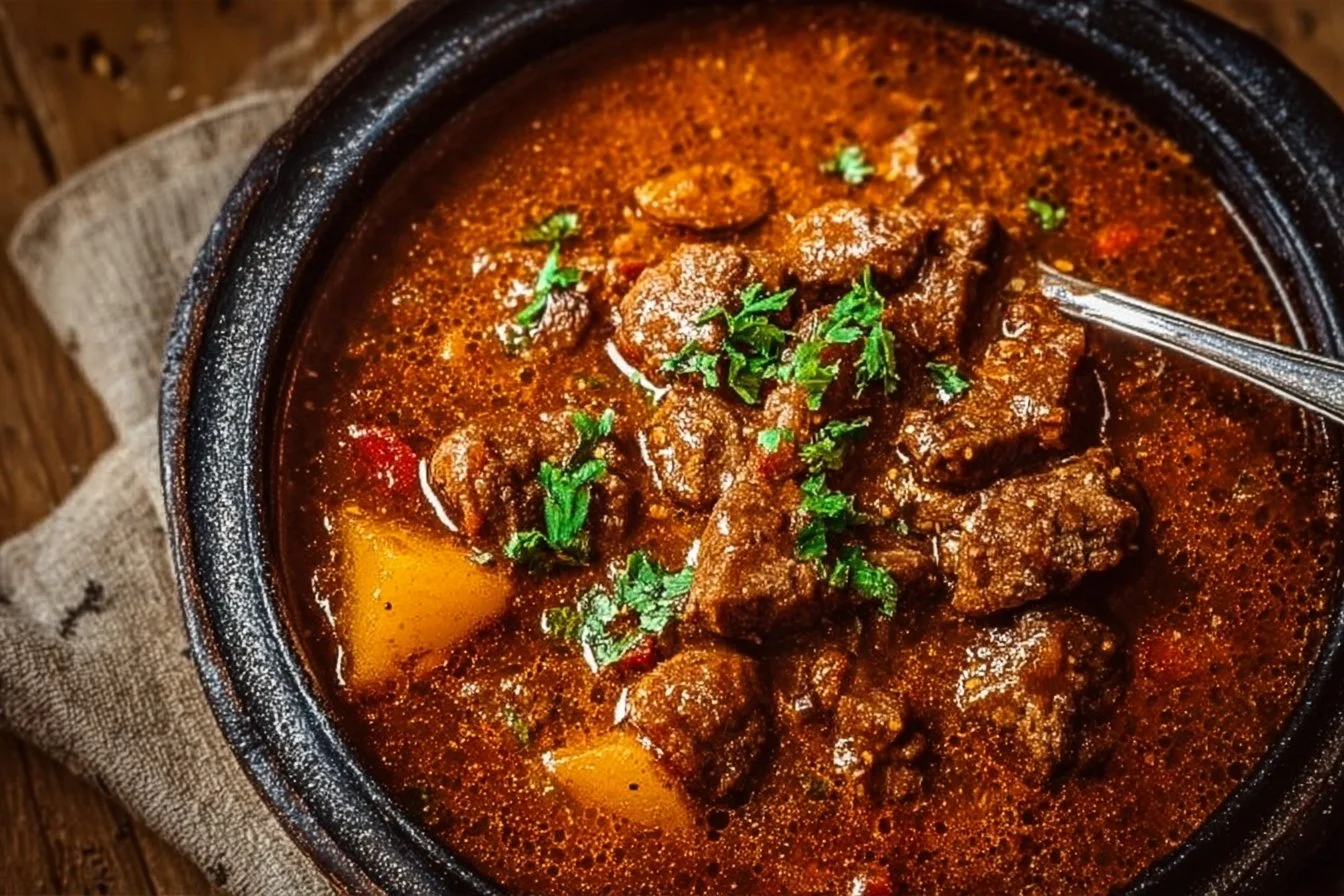
Hungarian Goulash Recipe
Hungarian Goulash is a hearty stew that brings together tender beef, aromatic spices, and vegetables to create a dish that’s as comforting as it is flavorful. This traditional recipe has roots in Hungary and has become beloved worldwide for its rich flavors and satisfying texture.
Why Make This Recipe
Making Hungarian Goulash is rewarding not just for the final dish but for the experience of cooking it. The process engages your senses as you savor the aromas of sautéing garlic and onions, the vibrant colors of paprika, and the satisfaction of serving a pot of warm, inviting stew. Whether on a chilly evening or a cozy gathering, this goulash is sure to impress and bring a smile to your table.
How to Make Hungarian Goulash
Creating a delicious Hungarian Goulash takes some time, but the resulting dish is well worth the effort. This recipe emphasizes the importance of proper cooking techniques to develop deep flavors. Let’s dive into the ingredient list and step-by-step directions!
Ingredients:
- 4 tablespoons olive oil: Olive oil serves as the foundation for sautéing and searing, imparting a subtle fruity note and preventing the meat and vegetables from sticking to the pan. It’s important to use a good quality olive oil for the best flavor. While olive oil is traditional in many modern recipes, some older Hungarian recipes might have used lard or other animal fats, which would add a richer, more traditional flavor. For a vegetarian option, you could substitute with vegetable oil or even coconut oil for a slightly different but still delicious result.
- 2½ pounds stewing beef (lean, cut into 1-inch pieces): The star of the show, stewing beef provides the hearty, meaty base for the goulash. Lean cuts like chuck roast or beef brisket are ideal because they contain connective tissue that breaks down during slow cooking, resulting in incredibly tender and succulent meat. Cutting the beef into 1-inch pieces ensures even cooking and allows for maximum surface area for searing, which is crucial for developing rich, browned flavors. For an even more authentic touch, you could ask your butcher for “goulash meat,” which is often a mix of different beef cuts specifically intended for stewing. If you are unable to find stewing beef, you can use a tougher cut of steak like sirloin tip, but be sure to trim away excess fat.
- 1 teaspoon salt (or to taste): Salt is the fundamental seasoning that enhances all the other flavors in the goulash. It draws out moisture from the beef during searing, promoting browning and intensifying its savory taste. Seasoning in layers is key – adding salt at different stages of cooking helps build a well-rounded flavor profile. Remember to taste and adjust the salt at the end to ensure it’s perfectly balanced to your preference. Kosher salt or sea salt are excellent choices for their clean, pure flavor.
- 1 teaspoon pepper (or to taste): Black pepper adds a subtle warmth and spice that complements the richness of the beef and paprika. Freshly ground black pepper is always preferred for its brighter and more aromatic flavor compared to pre-ground pepper. Like salt, pepper should be added at different stages to build complexity. White pepper can be used as a milder alternative, or for a touch of heat, you could add a pinch of cayenne pepper or red pepper flakes along with the black pepper.
- 2 large onions (roughly chopped): Onions form the aromatic base of the goulash, contributing sweetness and depth of flavor as they caramelize during cooking. Roughly chopping them is sufficient as they will soften and almost melt into the sauce during the long simmering process. Yellow or brown onions are the traditional choice, but you could also experiment with red onions for a slightly sweeter and milder flavor. For a more intense onion flavor, you can use shallots in combination with or instead of onions.
- 5 cloves garlic (minced): Garlic is another essential aromatic that adds pungency and savory notes to the goulash. Minced garlic releases its flavor readily and infuses the broth beautifully. Fresh garlic is always superior in flavor to pre-minced garlic in jars. For a milder garlic flavor, you can use roasted garlic or add the garlic cloves whole and remove them later. If you are a garlic lover, feel free to add an extra clove or two!
- 3 tablespoons sweet paprika: Paprika is the defining spice of Hungarian Goulash, imparting its signature color, flavor, and aroma. Sweet paprika, also known as noble sweet paprika, provides a mild, fruity, and slightly sweet flavor that is characteristic of traditional goulash. Hungarian paprika is considered the gold standard for authentic flavor, and it’s worth seeking out for the best results. Paprika’s flavor is heat-sensitive, so it’s important to add it after the onions and garlic have softened to prevent it from burning and becoming bitter. For a deeper, smokier flavor, you can use a combination of sweet paprika and smoked paprika.
- 1 teaspoon caraway seeds (ground): Caraway seeds add a distinctive earthy, anise-like flavor that is a hallmark of Hungarian cuisine and complements the paprika beautifully. Ground caraway seeds release their flavor more readily into the goulash. If you prefer a stronger caraway flavor, you can use whole caraway seeds instead, or lightly toast them before grinding to enhance their aroma. For those who are not fans of caraway, you could try substituting with fennel seeds for a similar but slightly sweeter anise note, or omit it altogether, although it will slightly alter the traditional flavor profile.
- 1 teaspoon oregano (dried): Dried oregano adds a subtle herbaceous and slightly peppery note that rounds out the spice blend in the goulash. It complements the paprika and caraway, adding another layer of complexity to the flavor. While dried oregano is convenient, fresh oregano can also be used – use about 1 tablespoon of chopped fresh oregano in place of 1 teaspoon dried. Other herbs that can be used in goulash, though less traditional, include marjoram or thyme.
- 3 bay leaves: Bay leaves infuse the goulash with a subtle, tea-like aroma and a slightly minty, herbaceous flavor. They are added whole and simmered with the goulash, releasing their flavor slowly over time. Remember to remove the bay leaves before serving as they are not meant to be eaten. Dried bay leaves are readily available and work perfectly well. Fresh bay leaves can also be used, and some say they have a slightly brighter flavor.
- 1 teaspoon brown sugar: Brown sugar adds a touch of sweetness that balances the savory flavors and enhances the caramelization of the onions and beef. It also helps to deepen the color of the goulash. Light or dark brown sugar can be used interchangeably. For a less refined sugar option, you could use coconut sugar or maple syrup in a smaller quantity.
- ½ cup tomato sauce: Tomato sauce adds a subtle tangy and umami depth to the goulash, enriching the broth and contributing to its vibrant red color. It also helps to thicken the sauce slightly. Use a good quality tomato sauce for the best flavor. Tomato paste can be used as a substitute – use about 1-2 tablespoons of tomato paste and sauté it with the onions and garlic before adding the other ingredients to deepen its flavor. For a brighter tomato flavor, you can use crushed tomatoes instead of tomato sauce.
- 2 tablespoons balsamic vinegar: Balsamic vinegar adds a touch of acidity and sweetness that brightens the flavors of the goulash and balances the richness of the beef and paprika. It also helps to tenderize the beef and adds a complex, slightly tangy note to the broth. Red wine vinegar or apple cider vinegar can be used as substitutes, although balsamic vinegar provides a unique depth of flavor. For a non-vinegar option, you can use a squeeze of lemon juice at the end of cooking.
- 4 cups beef broth (no salt added): Beef broth forms the liquid base of the goulash, providing moisture for slow cooking and contributing to the rich, savory flavor of the broth. Using no-salt-added beef broth allows you to control the salt level of the dish more precisely. High-quality beef broth is essential for a flavorful goulash. Homemade beef broth is always the best, but good quality store-bought broth is also perfectly acceptable. For a richer broth, you can use bone broth or beef stock.
- 2 tablespoons parsley (chopped, for garnish): Fresh parsley adds a bright, herbaceous, and slightly peppery note that serves as a refreshing garnish and visual appeal. It’s best to use flat-leaf parsley (Italian parsley) for its stronger flavor compared to curly parsley. Chopped parsley is sprinkled over the goulash just before serving to add a final touch of freshness and color. Other fresh herbs that can be used for garnish include chives, dill, or a sprinkle of fresh paprika.
Directions:
Begin by heating a large, deep skillet or Dutch oven over high heat. The key to developing deep, savory flavors in the goulash lies in properly searing the beef. Add the olive oil to the hot pan and let it heat up until it shimmers slightly. This indicates that the oil is hot enough for searing. Now, add the stewing beef to the skillet in a single layer, being careful not to overcrowd the pan. Overcrowding will lower the temperature and cause the beef to steam instead of sear. Season the beef generously with salt and pepper. Sear the beef on all sides until it develops a rich brown crust. Initially, the beef will release liquid as it cooks. Don’t be alarmed; this is normal. Continue searing on high heat, allowing the liquid to evaporate and the beef to brown properly. Alternatively, if there is a significant amount of liquid, you can drain it off to ensure proper browning. Searing is crucial because it creates the Maillard reaction, a chemical process that produces hundreds of flavor compounds, adding depth and complexity to the goulash. Remove the browned beef from the skillet and set it aside.
Reduce the heat to medium-high. In the same skillet, now infused with the delicious browned beef fond (the flavorful bits stuck to the bottom of the pan), add the roughly chopped onions and minced garlic. Cook for about 5 minutes, stirring occasionally, until the onions soften and become translucent. As the onions cook, they will release their natural sugars and begin to caramelize, adding sweetness and depth to the base of the goulash. The garlic will become fragrant, infusing the oil with its pungent aroma. Scrape up any browned bits from the bottom of the pan as you stir the onions and garlic – these flavorful bits, known as fond, will dissolve into the sauce and enhance its richness.
Turn the heat down to medium-low to prevent the paprika from burning. Add the sweet paprika, ground caraway seeds, dried oregano, bay leaves, and brown sugar to the skillet with the softened onions and garlic. Stir everything together to combine, ensuring the spices coat the onions and garlic evenly. Cook for about 30 seconds, stirring constantly, until the spices become fragrant and bloom. Blooming the spices in hot oil releases their essential oils, intensifying their flavor and aroma. Be careful not to overcook the paprika at this stage, as it can become bitter if burned.
Add the tomato sauce, balsamic vinegar, and beef broth to the skillet. Stir well to combine all the ingredients, scraping up any remaining browned bits from the bottom of the pan. The tomato sauce will add depth and color to the broth, while the balsamic vinegar will provide a touch of acidity to balance the richness. The beef broth will form the liquid base for the goulash and infuse it with savory flavor.
Return the seared beef to the skillet, nestling it into the broth. Bring the mixture to a boil over medium-high heat. Once boiling, reduce the heat to low, cover the skillet or Dutch oven tightly with a lid, and simmer gently for about 2 hours, or until the beef is fork-tender. Slow cooking at a low temperature allows the tough connective tissue in the stewing beef to break down gradually, resulting in incredibly tender and succulent meat. Stir the goulash occasionally during the cooking process to ensure even cooking and prevent sticking. As the goulash simmers, the liquid will reduce down and thicken, creating a rich and flavorful sauce. If the liquid reduces too much and the goulash starts to become dry, feel free to add more beef broth or water as needed to maintain a stew-like consistency.
After 2 hours of simmering, check the beef for tenderness. It should be easily pierced with a fork and fall apart with gentle pressure. Taste the goulash for seasoning and adjust with salt and pepper as needed. This is the crucial step to ensure the flavors are perfectly balanced to your preference. If you feel it needs more depth, you can add a pinch more paprika or a dash of balsamic vinegar. If it’s too acidic, you can add a tiny pinch of brown sugar. Remove the bay leaves before serving.
Garnish the Hungarian Goulash generously with freshly chopped parsley. Serve hot over your choice of accompaniments, such as egg noodles (spaetzle or Hungarian nokedli), mashed potatoes, or crusty bread. The bright green parsley adds a pop of color and freshness to the rich, red goulash.
Pro Tips for Success
- Sear the Meat Properly: Searing the beef until it’s well-browned is essential for flavor. Ensure your pan is hot enough and don’t rush this step.
- Use Quality Ingredients: For the best flavors, opt for high-quality beef broth and authentic Hungarian paprika.
- Adjust Seasoning: Always taste and adjust the seasoning towards the end of cooking for a perfectly balanced goulash.
- Low and Slow: Be patient with the simmering process. Slow cooking is key to breaking down the meat and developing flavors.
Flower Variations
- Vegetarian Option: Substitute the beef with hearty vegetables such as mushrooms, eggplant, or even lentils to create a vegetarian version of goulash.
- Spicy Twist: Add diced jalapeños or red pepper flakes for those who enjoy a spicy kick in their goulash.
- Different Meats: For a different take, try using lamb or pork instead of beef. Each will impart a unique flavor to the dish.
Serving Suggestions
Hungarian Goulash pairs beautifully with several sides. Common accompaniments include:
- Egg noodles (like spaetzle or Hungarian nokedli)
- Creamy mashed potatoes
- Crusty bread or rolls
- A fresh side salad
Storage and Freezing Instructions
To store leftover Hungarian Goulash, allow it to cool completely before transferring it to an airtight container. It will keep well in the refrigerator for 3-4 days. Alternatively, you can freeze it for up to 3 months. Just make sure to leave some space in the container, as the stew will expand when frozen. Thaw overnight in the fridge before reheating, and add a splash of broth if it appears too thick.
Nutrition Facts (Per Serving)
| Nutrient | Amount |
|————–|————–|
| Calories | 450 |
| Protein | 35g |
| Carbohydrates| 22g |
| Fat | 25g |
| Fiber | 4g |
| Sodium | 600mg |
FAQ About Hungarian Goulash
What is the difference between regular goulash and Hungarian goulash?
Hungarian goulash is a stew that focuses on beef, paprika, and vegetables, while American goulash is often a pasta dish with a tomato-based sauce. Essentially, the main ingredients and preparation methods are different, which gives each dish its unique identity.
Can I make goulash in a slow cooker?
Yes! To make Hungarian Goulash in a slow cooker, simply follow the same steps for browning the beef and sautéing the onions and garlic. Then transfer everything to the slow cooker, add the remaining ingredients, and cook on low for 6-8 hours or on high for 3-4 hours until the beef is tender.
What types of meat can I use in goulash?
While beef is traditional, you can use other meats like pork or even lamb. For a lighter option, chicken works well, though it will produce a different flavor profile. You can also create a vegetarian version using mushrooms or lentils.
Can I adjust the spice level of the goulash?
Absolutely! You can control the spice level by how much black pepper you add and by including optional spicy ingredients like cayenne pepper or red pepper flakes. Taste as you go to ensure you achieve your desired level of heat.
Is it necessary to use sweet paprika?
For authentic Hungarian Goulash, sweet paprika is essential. It gives the dish its characteristic flavor and color. If you can’t find sweet paprika, you may use a mild version, but the taste will differ slightly.
Final Thoughts
Hungarian Goulash is not just a meal; it’s an experience steeped in tradition and flavor. This recipe invites you to bask in the comforting aroma that fills your kitchen and brings loved ones together around the table. Whether you follow the recipe closely or make it your own with variations, you can be sure this dish will become a cherished favorite. Enjoy every delicious bite!
Print
Hungarian Goulash
- Total Time: 135 minutes
- Yield: 6 servings
- Diet: Carnivore
Description
A hearty stew bringing together tender beef, aromatic spices, and vegetables for a comforting and flavorful dish.
Ingredients
- 4 tablespoons olive oil
- 2½ pounds stewing beef (lean, cut into 1-inch pieces)
- 1 teaspoon salt (or to taste)
- 1 teaspoon pepper (or to taste)
- 2 large onions (roughly chopped)
- 5 cloves garlic (minced)
- 3 tablespoons sweet paprika
- 1 teaspoon caraway seeds (ground)
- 1 teaspoon oregano (dried)
- 3 bay leaves
- 1 teaspoon brown sugar
- ½ cup tomato sauce
- 2 tablespoons balsamic vinegar
- 4 cups beef broth (no salt added)
- 2 tablespoons parsley (chopped, for garnish)
Instructions
- Heat a large skillet or Dutch oven over high heat and add olive oil.
- Once the oil shimmers, add the stewing beef in a single layer and season with salt and pepper. Sear until browned on all sides.
- Remove the beef and set it aside. Reduce the heat to medium-high.
- Add onions and garlic to the skillet and cook until softened.
- Lower the heat to medium-low and add paprika, caraway seeds, oregano, bay leaves, and brown sugar, stirring until fragrant.
- Add tomato sauce, balsamic vinegar, and beef broth to the skillet. Scrape up any browned bits.
- Return the beef to the skillet, bringing the mixture to a boil. Then reduce heat, cover, and simmer for about 2 hours until the beef is fork-tender.
- Check seasoning and adjust if necessary. Remove bay leaves before serving.
- Garnish with parsley and serve hot over accompaniments like egg noodles or mashed potatoes.
Notes
For a vegetarian option, replace beef with hearty vegetables such as mushrooms or lentils. Store leftover goulash in an airtight container for up to 3-4 days or freeze for up to 3 months.
- Prep Time: 15 minutes
- Cook Time: 120 minutes
- Category: Main Course
- Method: Braising
- Cuisine: Hungarian