Rhubarb Sauce: bright, tangy, and surprisingly versatile
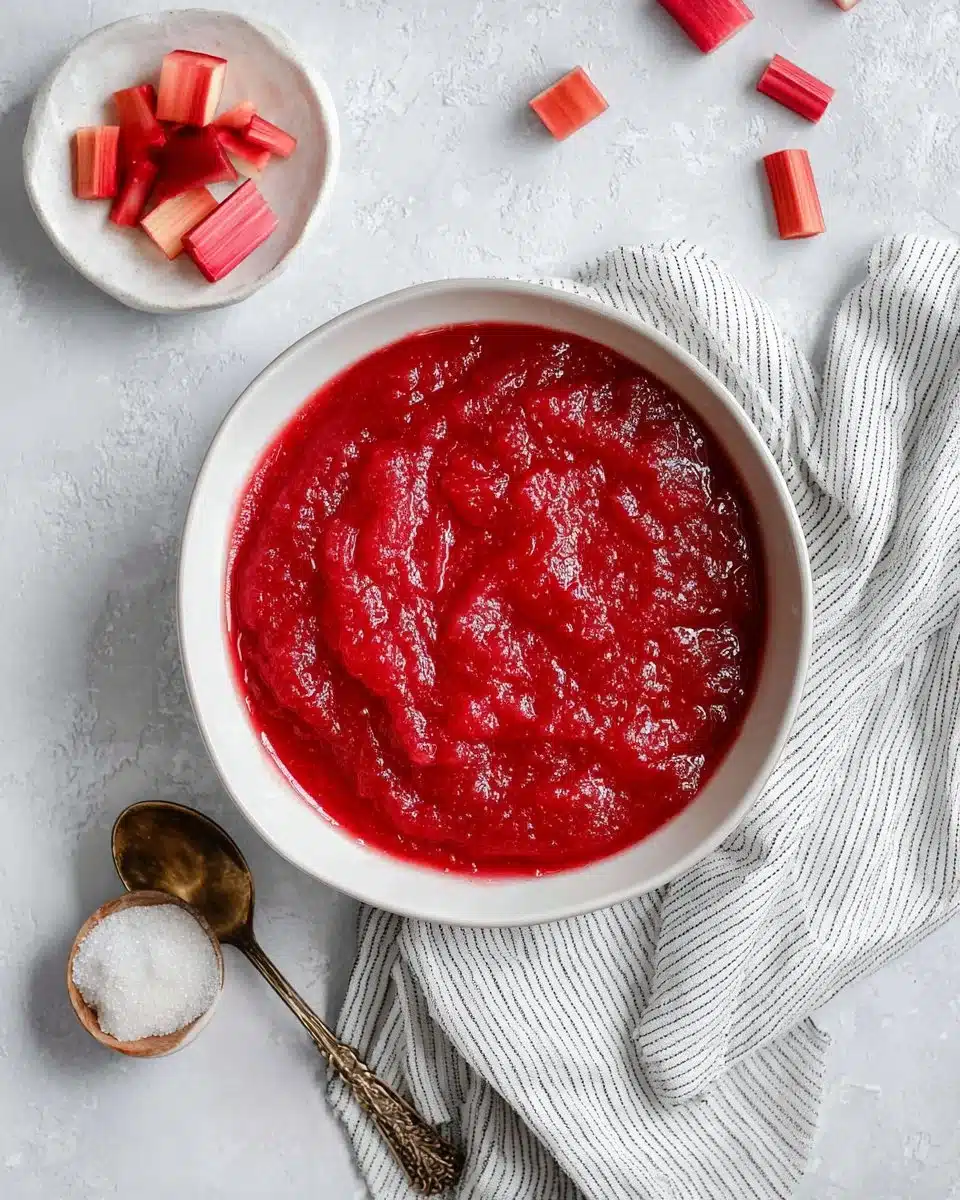
Rhubarb Sauce is a simple, jewel-toned condiment that brightens breakfasts, snacks, and desserts with its tart-sweet flavor. If you enjoy tangy, slightly fruity sauces that can shift from breakfast bowls to savory glazes, you’ll find this rhubarb sauce an easy, rewarding addition to your cooking repertoire. For inspiration on how bold sauces can transform a dish, consider the way an Alabama-style white barbecue sauce for chicken takes a meal in a new direction — rhubarb sauce can do the same for many recipes.
This article walks through what makes rhubarb sauce special, how to make it step by step, smart tips to get consistent results, fun flavor variations, serving ideas, storage guidance, nutrition estimates, and answers to common questions so you can use the sauce confidently.
Why make this recipe
Rhubarb sauce is worth making because it’s fast, flexible, and full of bright flavor. Two pounds of tender red rhubarb plus a little sugar and water cook down into a glossy sauce in under 20 minutes, so it’s ideal when rhubarb is in season and you want something fresh and homemade. Here are a few reasons to give it a try:
- Speed and simplicity: Minimal ingredients and one-pot cooking make this a quick weekday or weekend project.
- Versatility: Use it as a topping, a glaze, a mix-in, or a spread across sweet and savory dishes.
- Control over sweetness: You can easily adjust sugar to keep it tart or make it sweeter, and even swap sweeteners if needed.
- Seasonal charm: The color and tang of rhubarb announce spring and early summer; making sauce preserves that flavor for weeks or months.
- Better than store-bought: Homemade retains freshness and texture — you can decide how chunky or smooth it should be.
If you’ve never cooked with rhubarb much, this recipe is an inviting starting point that showcases the vegetable’s natural acidity and vivid color without complicated techniques.
{image_template}
How to make Rhubarb Sauce
This homemade rhubarb sauce is forgiving and hands-on friendly. Below you’ll find the ingredient list and the simple directions. In practice, making the sauce takes only a few minutes of active time plus a short simmer while you stir and taste.
Ingredients :
- 2 pounds tender red rhubarb, cut into 1/2 inch pieces
- 1/2 cup water (or more for a looser sauce)
- 2/3 cup sugar (use less for a tart sauce, more for a sweeter sauce)
- 1 drop red food coloring (optional)
Ingredient notes and substitutions:
- Use tender red stalks for the best color and mildest flavor; greener stalks are fine but may be tarter.
- If you prefer a natural color boost, swap the red food coloring for a tablespoon of cranberry or pomegranate juice.
- To reduce refined sugar, replace half or all of the sugar with honey, maple syrup, or a granulated sugar substitute, but taste as you go — liquid sweeteners change texture slightly.
- If you want a looser sauce, add another tablespoon or two of water during cooking. For a thicker spoonable sauce, cook a little longer uncovered so excess liquid evaporates.
- No need to remove the strings on rhubarb like you would celery; trimming the ends and cutting into even pieces is enough.
Directions :
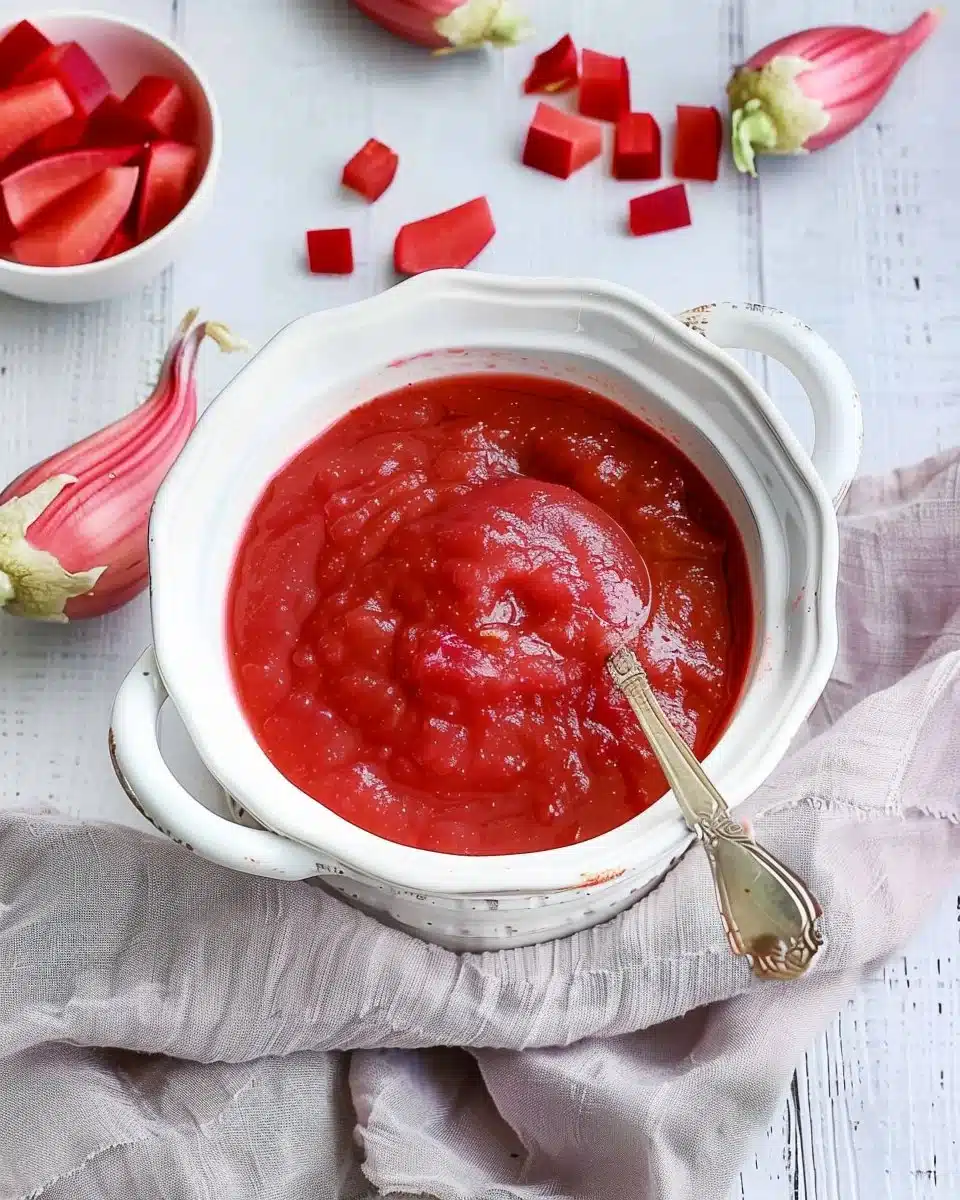
In a medium saucepan over medium to medium high heat, stir together all sauce ingredients. Let mixture come to a boil, then reduce heat to medium low and let simmer until rhubarb is broken down but chunks still remain, about 10 to 15 minutes. Taste test the sauce while it is simmering; add more sugar for sweetness or more water for a thinner consistency. For added color, stir in a drop or two of red food coloring. Remove from heat and let cool completely. Store in an airtight container in the fridge for up to 1 week or in the freezer for up to 6 months.
Pro Tips for Success Rhubarb Sauce
- Start with even pieces: Cut stalks into consistent 1/2-inch pieces so they break down at the same rate and give a uniform texture.
- Taste often and adjust: Because rhubarb varies in tartness, taste after about 8 minutes of simmering and add sugar or water a little at a time to reach the balance you like.
- Control texture with cooking time: For a saucier finish, simmer until most pieces have collapsed. For a chunky topping, stop when pieces are soft but still distinct.
- Use gentle heat and stir: Medium-low heat avoids scorching and keeps the sugars from sticking to the pan; stir every few minutes to keep the sauce silky.
- Finish off the flavor: A tiny pinch of salt brightens the sauce, and a small splash of lemon juice can lift the tartness if the rhubarb is very sweet or dull in color.
- Cool before storing: Let the sauce reach room temperature before sealing in a container to avoid condensation that can dilute or slightly ferment the sauce in the fridge.
Flavor Variations Rhubarb Sauce
Rhubarb’s tart backbone pairs with many flavors. Try one of these variations to match your meal or mood:
- Ginger-Rhubarb: Add 1 teaspoon grated fresh ginger while the sauce simmers for a warm, slightly spicy lift that pairs beautifully with pork or yogurt.
- Vanilla Honey: Stir in 1 teaspoon vanilla extract and swap half the sugar for honey for a softer, floral sweetness that’s great on pancakes.
- Orange Zest and Cardamom: Add the zest of one orange and a pinch (1/8 teaspoon) of ground cardamom for a citrusy, aromatic twist ideal for desserts.
- Berry Blend: Toss in 1 cup fresh or frozen strawberries or raspberries during the last 5–7 minutes of cooking to make a mixed-fruit sauce with deeper color and fewer added sugars.
- Savory-Sweet Mustard: Stir in 1 teaspoon Dijon mustard and a splash of apple cider vinegar for a glaze suited to roasted chicken or pork alternatives.
When you try variations, adjust cook time and liquid. Berries release extra juice, while spices can be added early to bloom in the simmering liquid.
Serving Suggestions Rhubarb Sauce
Rhubarb sauce is a multitasker that can be used across breakfasts, baking, savory mains, and snacks. Here are serving ideas to inspire everyday meals and special occasions:
- Breakfast topper: Spoon warm rhubarb sauce over Greek yogurt, cottage cheese, oatmeal, or pancakes for a bright start.
- Toast and scones: Use as a spread on buttered toast or scones in place of jam; the tartness cuts through buttery baked goods.
- Cheese pairing: Serve alongside a cheese board—tangy goat cheese, creamy brie, or sharp cheddar benefit from rhubarb’s acidity.
- Ice cream and desserts: Warm over vanilla ice cream, dollop on pound cake, or swirl into whipped cream for an easy dessert upgrade.
- Savory glaze or condiment: Use as a glaze for roasted chicken, turkey, smoked tofu, or grilled vegetables; the sauce’s acidity balances richness. It’s a creative companion when you want to experiment with contrasting flavors the same way some cooks pair rich poultry with bold sauces like an artichoke spinach parmesan cream sauce on adventurous pizza toppings.
- Cocktail and mocktail syrup: Thin the sauce with a little water and stir into sparkling water or cocktails for a seasonal, fruity mixer.
- Sandwich spread: Mix with a bit of mayonnaise or cream cheese and slather on turkey or chicken sandwiches for a tangy-sweet layer.
Think of rhubarb sauce as a flexible condiment rather than one-use jam: it can rise to the role of both sweet accent and complementary savory partner.
Storage and Freezing Instructions Rhubarb Sauce
Storing rhubarb sauce properly keeps its flavor fresh and extends shelf life. Follow these steps for best results:
- Refrigerator: Transfer cooled sauce to an airtight container and refrigerate. It will keep well for up to 1 week. Stir before serving; if it has separated slightly, a quick stir or gentle reheating will restore texture.
- Freezing: Use freezer-safe containers or resealable bags and leave a little headspace because liquids expand when frozen. The sauce freezes well for up to 6 months. Thaw in the refrigerator overnight, then stir and gently reheat if you prefer it warm.
- Portioning: Freeze in small portions (ice cube trays or 1/2-cup containers) to make it easy to thaw exactly what you need for a single serving or recipe.
- Labeling: Always label containers with the date and any flavor additions (e.g., ginger or orange) so you can quickly identify contents later.
- Reheating: Reheat gently over low heat on the stove, adding a splash of water if it seems too thick. Microwaving in short bursts works too; stir between intervals.
If you notice off smells, visible mold, or bubbling after refrigeration, discard the sauce. Proper cooling and airtight sealing help prevent spoilage.
Nutrition Facts (Per Serving) — Rhubarb Sauce
These values are estimates for one serving, assuming the recipe yields eight servings total.
- Calories: 90 kcal
- Protein: 1 g
- Carbohydrates: 22 g
- Fat: 0 g
- Fiber: 2 g
- Sodium: 10 mg
Notes on nutrition:
- The biggest contributor to calories and carbs is the sugar added to the sauce. Reducing sugar or using alternative sweeteners will lower calories and carbohydrates.
- Rhubarb itself is low-calorie and provides vitamin K, vitamin C, and fiber. Nutrition will vary slightly with the size of the batch and any flavor additions like maple syrup or fruit.
- If you need a precise breakdown for dietary tracking, weigh your final yield and use a nutrition calculator or app to get per-gram values.
FAQ About Rhubarb Sauce
What is the best type of rhubarb to use for sauce?
The best rhubarb for sauce is young, tender red or deep-pink stalks picked in spring and early summer. Tender stalks have milder tartness and vibrant color, which makes for a prettier and more balanced sauce. Avoid thick, woody, or very green stalks from the end of the season because they can be stringy and more intensely tart; if you only have larger stalks, trim away any fibrous bits and cut them small so they soften evenly.
How can I make this sauce less tart without adding a lot of refined sugar?
To reduce tartness without overdoing refined sugar, try adding a touch of natural sweeteners like honey or maple syrup, or include a small amount of ripe fruit (strawberries or apples) during cooking, which contribute gentle sweetness and extra liquid. You can also simmer slightly longer to concentrate flavors and then add a half-teaspoon of baking soda very cautiously to neutralize some acidity — but only a pinch, because baking soda reacts quickly and can flatten the flavor. Taste gradually as you adjust, and stop when the balance feels right to you.
Can I use frozen rhubarb for this sauce?
Yes—frozen rhubarb works well and is convenient year-round. Thaw it first and drain any excess liquid if the pieces are very wet, or add the frozen pieces directly to the saucepan and increase the simmer time slightly; cooking time may be a few minutes longer. Keep in mind frozen rhubarb might be softer and will break down faster, so monitor texture as it cooks.
How do I make the sauce smoother if I prefer no chunks?
If you want a smooth sauce, mash the softened rhubarb gently with a potato masher while it’s in the pan, or use an immersion blender for a few pulses to reach the desired consistency. Another option is to push the cooked mixture through a fine mesh sieve for a silky, seed-free purée. If you start with more water and simmer longer, the sauce will already be closer to a smooth texture.
Is rhubarb sauce safe for children and pregnant people?
Yes, rhubarb sauce made from stalks is safe for most people when prepared normally; the leaves of rhubarb are toxic and should never be used. Use stalks only and rinse them before cooking. If you’re pregnant, nursing, or making food for small children, avoid adding raw or excessive amounts of alcohol or very strong spices; the recipe provided contains no alcohol and is mild. If there are specific dietary concerns or medical conditions, check with a healthcare provider.
Can I use rhubarb sauce as a glaze for meat?
Absolutely. Rhubarb sauce’s tangy-sweet nature makes it an excellent glaze for roasted or grilled meats, especially poultry, smoked turkey, and pork alternatives like smoked tofu or tempeh. Brush the sauce on in the last 5–10 minutes of cooking so it warms and caramelizes slightly without burning. For a savory glaze, stir in a spoonful of mustard or a splash of vinegar to balance sweetness and add depth.
Final Thoughts
Rhubarb sauce offers a quick, adaptable way to bring seasonal brightness into many dishes. With just rhubarb, a little water, and sugar, you can create a condiment that’s at home on breakfast bowls, cheese boards, desserts, and savory plates. The recipe is friendly to experimentation—try spices, citrus, or other fruits to match your menu—and it freezes well so you can enjoy the taste of rhubarb long after the stalks are gone from markets. Keep a jar in your fridge or freezer and let this tangy sauce become one of those small, flavorful tools that make everyday cooking more interesting.
Print
Rhubarb Sauce
- Total Time: 20 minutes
- Yield: 8 servings
- Diet: Vegan
Description
A bright, tangy condiment made from tender red rhubarb, perfect for enhancing breakfasts, snacks, and desserts.
Ingredients
- 2 pounds tender red rhubarb, cut into 1/2 inch pieces
- 1/2 cup water (or more for a looser sauce)
- 2/3 cup sugar (use less for a tart sauce, more for a sweeter sauce)
- 1 drop red food coloring (optional)
Instructions
- In a medium saucepan over medium to medium high heat, stir together all sauce ingredients.
- Let mixture come to a boil, then reduce heat to medium low and let simmer until rhubarb is broken down but chunks still remain, about 10 to 15 minutes.
- Taste test the sauce while it is simmering; add more sugar for sweetness or more water for a thinner consistency.
- For added color, stir in a drop or two of red food coloring.
- Remove from heat and let cool completely.
Notes
Use tender red stalks for the best color and mildest flavor; consider flavor variations like ginger or vanilla honey for added depth.
- Prep Time: 5 minutes
- Cook Time: 15 minutes
- Category: Condiment
- Method: Cooking
- Cuisine: American