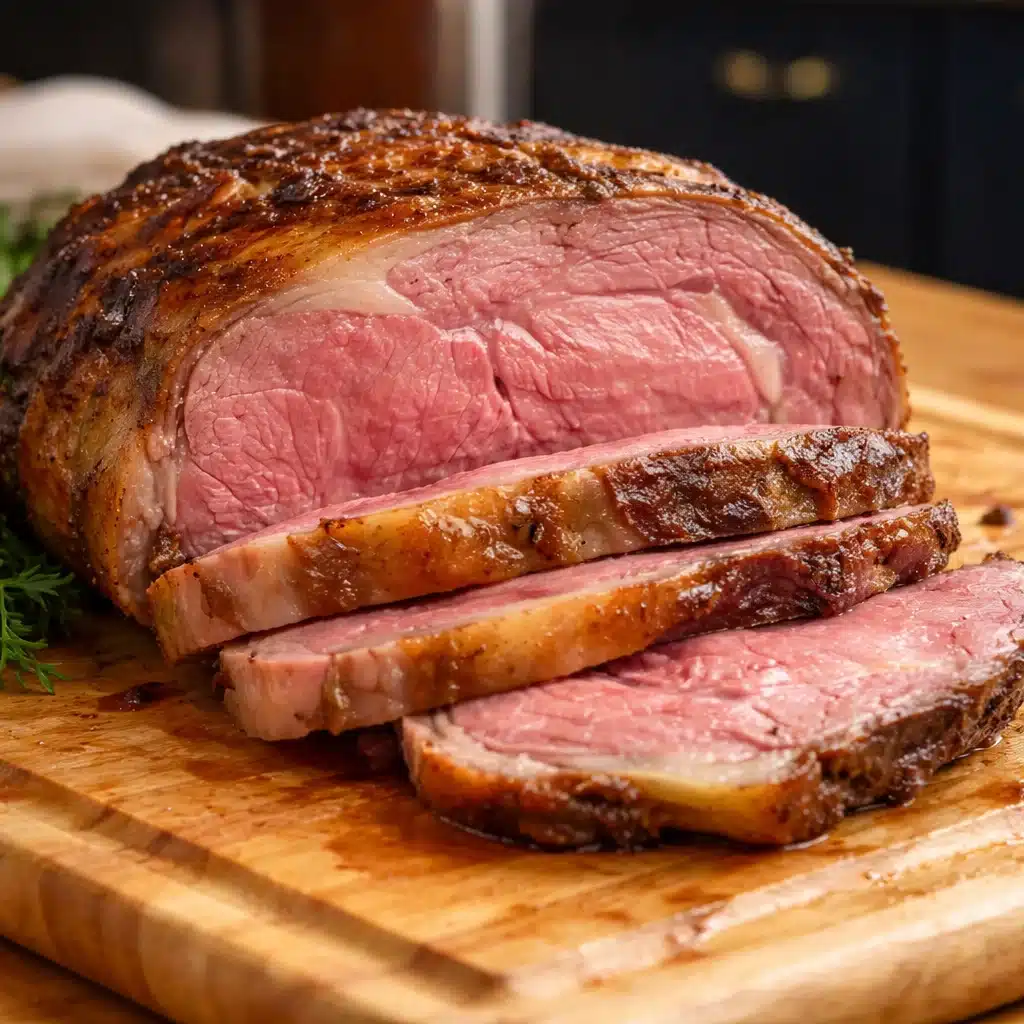
Standing Rib Roast is one of those meals that sounds fancy enough to make you nervous, especially if you are feeding people you really want to impress. I used to overthink it, poke it too much, and somehow still worry it would come out dry. But after a few holiday tries (and one slightly overdone birthday roast I will not talk about), I landed on a method that is simple, reliable, and honestly kind of relaxing. You do not need chef skills, just a good roast, a thermometer, and a little patience. If you have been staring at a big hunk of beef wondering where to start, you are in the right place.
COOK
This is my favorite part, because once the roast is in the oven, the house starts smelling like you did something very impressive on purpose. The main idea is seasoning well, cooking at two temperatures, and letting the meat rest long enough so it stays juicy when you slice it.
What you will need
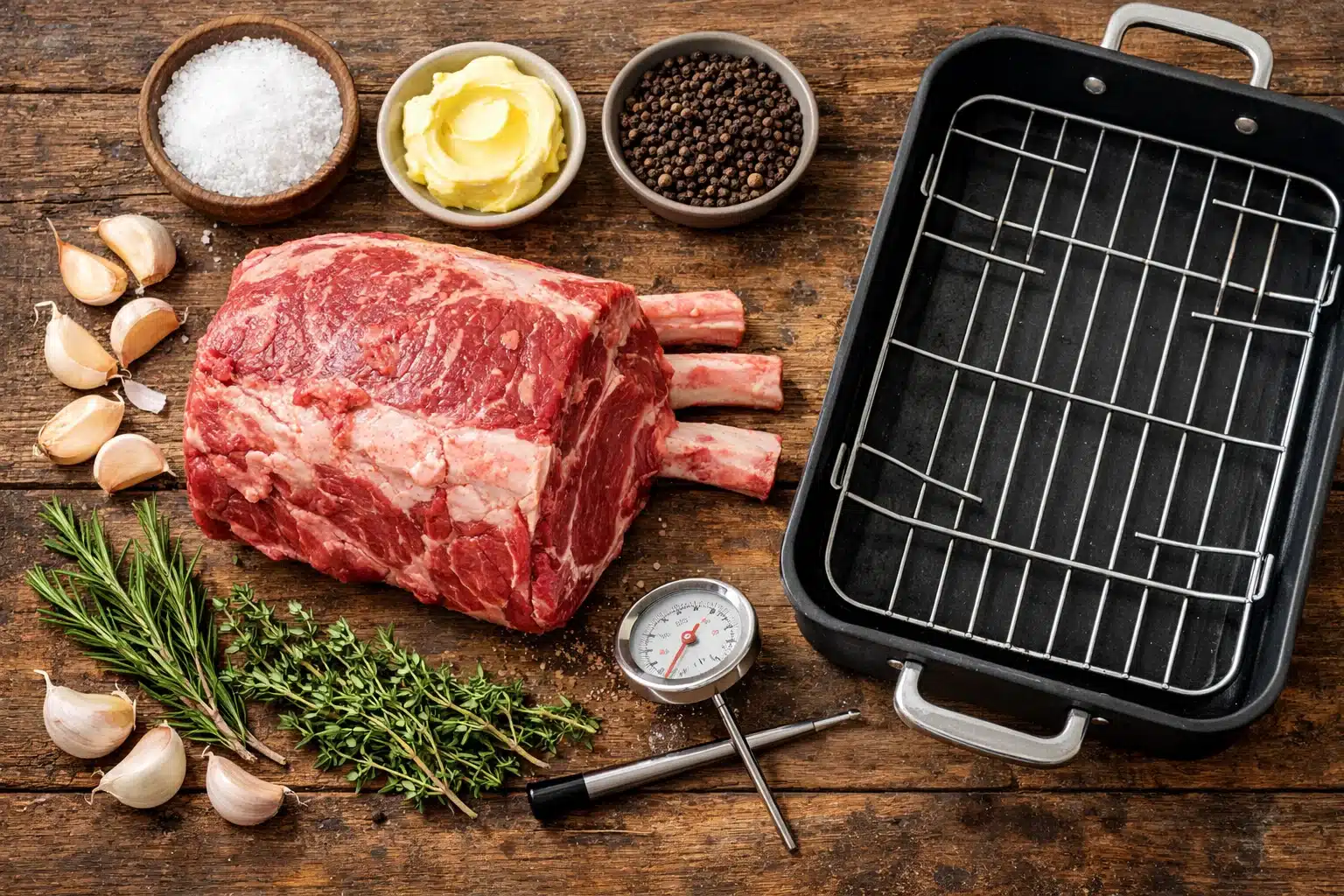
- Standing Rib Roast (bone in, 3 to 6 bones is a sweet spot)
- Kosher salt (do not be shy)
- Black pepper
- Garlic (fresh cloves or garlic paste)
- Fresh herbs like rosemary and thyme (or dried in a pinch)
- Olive oil or softened butter
- Optional: Dijon mustard for a little tang
- A roasting pan with a rack (or a sheet pan and a wire rack)
- Meat thermometer
I usually salt the roast the night before if I can. That one step makes it taste more “beefy” and helps the outside brown better. If you are short on time, even a couple hours uncovered in the fridge helps.
For cooking temps, I do a quick high heat start, then lower heat until it hits my target. It is not complicated. It is just a way to get a browned crust without overcooking the middle.
Also, if you love that steakhouse vibe, you might enjoy this recipe too: Ruths Chris style roasted garlic herb prime rib. I have borrowed little seasoning ideas from it when I want extra garlic and herbs.
Procedure
Here is the exact flow I follow. I am writing it the way I actually do it in my kitchen, including the little pauses where you tidy up and pretend you are not impatient.
Step by step roast plan
1) Bring it closer to room temp.
I take the roast out of the fridge about 1 to 2 hours before cooking. It does not need to be warm, just not ice cold. This helps it cook more evenly.
2) Preheat the oven.
Start at 450 F. Yes, it is hot. That is the point for the first blast.
3) Season like you mean it.
Pat the roast dry. Rub with a little oil or butter, then salt and pepper all over. Add minced garlic and chopped herbs. If using Dijon, I smear a thin layer on first, then the garlic and herbs stick nicely.
4) Roast at high heat.
Put it fat side up, bones down. Roast at 450 F for about 20 minutes. This starts the crust.
5) Lower the heat and keep roasting.
Turn the oven down to 325 F and keep cooking until your thermometer says you are close to done. Rough timing is about 15 to 17 minutes per pound, but please trust the thermometer more than the clock.
6) Pull it a little early.
These are the temps I aim for when I remove it from the oven:
Rare: 120 to 125 F
Medium rare: 125 to 130 F
Medium: 135 F
7) Rest, rest, rest.
Tent loosely with foil and rest 25 to 40 minutes. During this time, the temp rises a bit and the juices settle back in. If you cut too soon, they end up on the cutting board instead of in your slice.
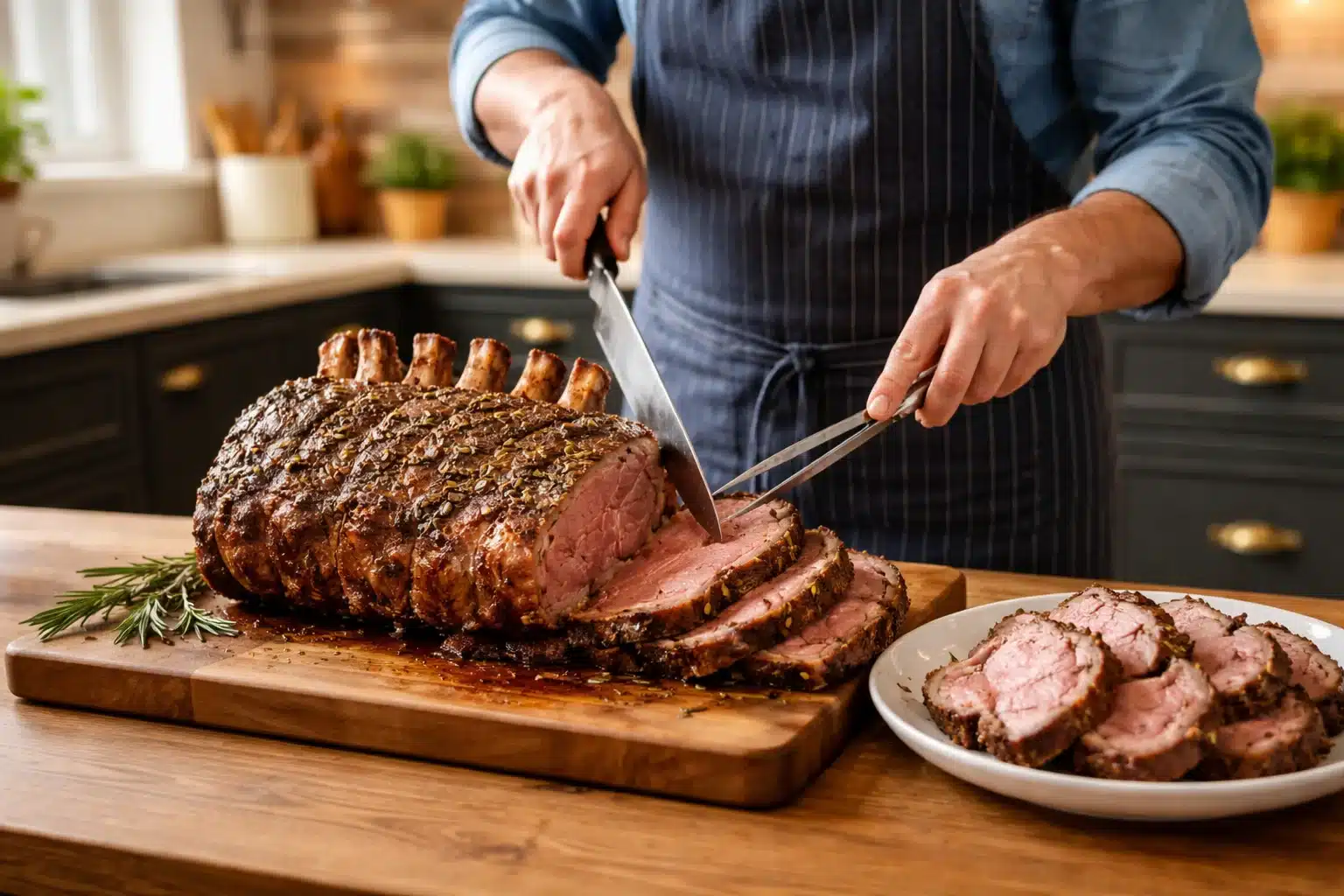
8) Slice and serve.
Cut along the bones to remove the rack in one piece, then slice the ribeye section into thick pieces. I like thicker slices because they stay warm and juicy longer on the plate.
“I was terrified to cook a rib roast for Christmas, but this was the first time it came out tender and not dry. The rest time made all the difference.”
Tips for Perfect Rib Roast
This is where people usually get stuck: picking the roast, knowing when it is done, and getting that crust without drying it out. Here are the tips that have saved me the most stress.
Buy the right size. Plan on about 1 pound per person if you want leftovers, or a little less if you have a big spread of sides. If you can, choose a roast with a nice fat cap and good marbling.
Bone in helps. The bones act like a little heat buffer and the roast tends to cook more gently. Plus it looks dramatic in the best way.
Salt early if possible. Even if you only have 2 to 3 hours, salting and leaving it uncovered in the fridge improves flavor and browning.
Use a thermometer and trust it. Oven temperatures vary and roasts are all different shapes. A thermometer turns guesswork into dinner.
Do not skip the rest. I know it is hard. People start circling the kitchen. But resting is what keeps Standing Rib Roast juicy when you cut it.
Make an easy pan sauce. While the roast rests, skim off excess fat and splash a little beef broth into the roasting pan. Scrape up the browned bits, simmer a few minutes, and season. It tastes like you worked way harder than you did.
If you ever want another beef dinner that feels special but is more weeknight friendly, I also like these: boneless beef short ribs recipe. Different vibe, same cozy payoff.
Yorkshire Pudding Variations
I cannot talk about Standing Rib Roast without talking about Yorkshire pudding. It is basically a puffy, crispy, golden little bread that feels like it was designed to soak up roast juices. If you have never made it, do not overthink it. It is a simple batter, a hot pan, and a little faith.
Here are a few variations I have tried when I want to switch it up:
Classic: Simple batter of eggs, milk, flour, and salt. Bake in hot beef drippings.
Herb version: Add chopped thyme or rosemary to the batter. Not too much, just enough to smell it.
Mini puddings: Use a muffin tin for individual portions. They puff like crazy and look adorable on the plate.
Extra crispy: Let the batter rest 30 minutes, and make sure the pan and drippings are screaming hot before you pour.
My one real warning: do not open the oven door a bunch while they bake. They deflate if you mess with them. I learned that the hard way, twice.
Side Dishes to Serve
When Standing Rib Roast is the star, I like sides that are simple and comforting. You do not need ten things. You just need a few that work well with rich beef and gravy.
- Crispy roasted potatoes (crunchy edges, soft centers). If you want a solid method, I like this one: crispy roast potatoes.
- Roasted vegetables like carrots, Brussels sprouts, or green beans
- Horseradish sauce or a creamy mustard sauce
- A simple salad with a sharp vinaigrette to cut the richness
- Warm rolls if you have gravy or pan sauce (which you should)
If I am cooking for a crowd, I pick one starchy side, one green side, and one sauce. That keeps the kitchen calmer and the timing easier.
Common Questions
How do I know when Standing Rib Roast is done?
Use a meat thermometer in the thickest part, not touching bone. Pull it a little early because it keeps cooking while it rests.
Should I cover the roast while it cooks?
No. Leaving it uncovered helps it brown. Covering is only for resting, and even then I do a loose tent so the crust stays nice.
What if my roast is cooking too fast?
Check that your oven temp is accurate if you can. If it is moving quickly, lower the oven to 300 F and keep going slow. The thermometer is your guide.
Can I prep it the day before?
Yes, and it helps. Salt it and leave it uncovered in the fridge overnight. You can also mix your garlic herb rub ahead of time.
How do I reheat leftovers without drying them out?
Slice what you will eat, add a splash of broth, cover lightly with foil, and warm in a low oven around 275 F until just heated through.
A cozy final note before you cook
If you take one thing from this post, let it be this: Standing Rib Roast is not hard, it just needs a thermometer and a good rest. Once you do it once, you will feel weirdly confident the next time a holiday or big dinner pops up. If you want to compare approaches, I have bookmarked Holiday Standing Rib Roast and Yorkshire Pudding – Alton Brown and I also love the science and timing tips in Roasted and Reverse Seared Prime Rib Recipe – Serious Eats. Try my method, make it your own, and do not forget those drippings for gravy. You have got this, and I hope your kitchen smells absolutely amazing tonight.
Print
Standing Rib Roast
- Total Time: 170 minutes
- Yield: 6 servings
- Diet: None
Description
A simple and reliable method for cooking a Standing Rib Roast that impresses at any gathering.
Ingredients
- Standing Rib Roast (bone in, 3 to 6 bones)
- Kosher salt
- Black pepper
- Fresh garlic (or garlic paste)
- Fresh herbs (rosemary and thyme) or dried
- Olive oil or softened butter
- Optional: Dijon mustard
- A roasting pan with a rack
- Meat thermometer
Instructions
- Bring the roast closer to room temp by taking it out of the fridge 1 to 2 hours before cooking.
- Preheat the oven to 450°F.
- Season the roast with oil or butter, salt, pepper, minced garlic, and herbs. If using Dijon, apply it first.
- Roast fat side up, bones down at 450°F for about 20 minutes to start the crust.
- Lower the heat to 325°F and continue cooking until the thermometer reads close to done (about 15 to 17 minutes per pound).
- Pull the roast out a little early, aiming for 120-125°F for rare, 125-130°F for medium rare, 135°F for medium.
- Rest the roast loosely tented with foil for 25-40 minutes.
- Slice along the bones and serve thick pieces of ribeye.
Notes
Resting the roast after cooking is crucial for keeping it juicy. Trust your meat thermometer for the best results.
- Prep Time: 120 minutes
- Cook Time: 50 minutes
- Category: Main Course
- Method: Roasting
- Cuisine: American