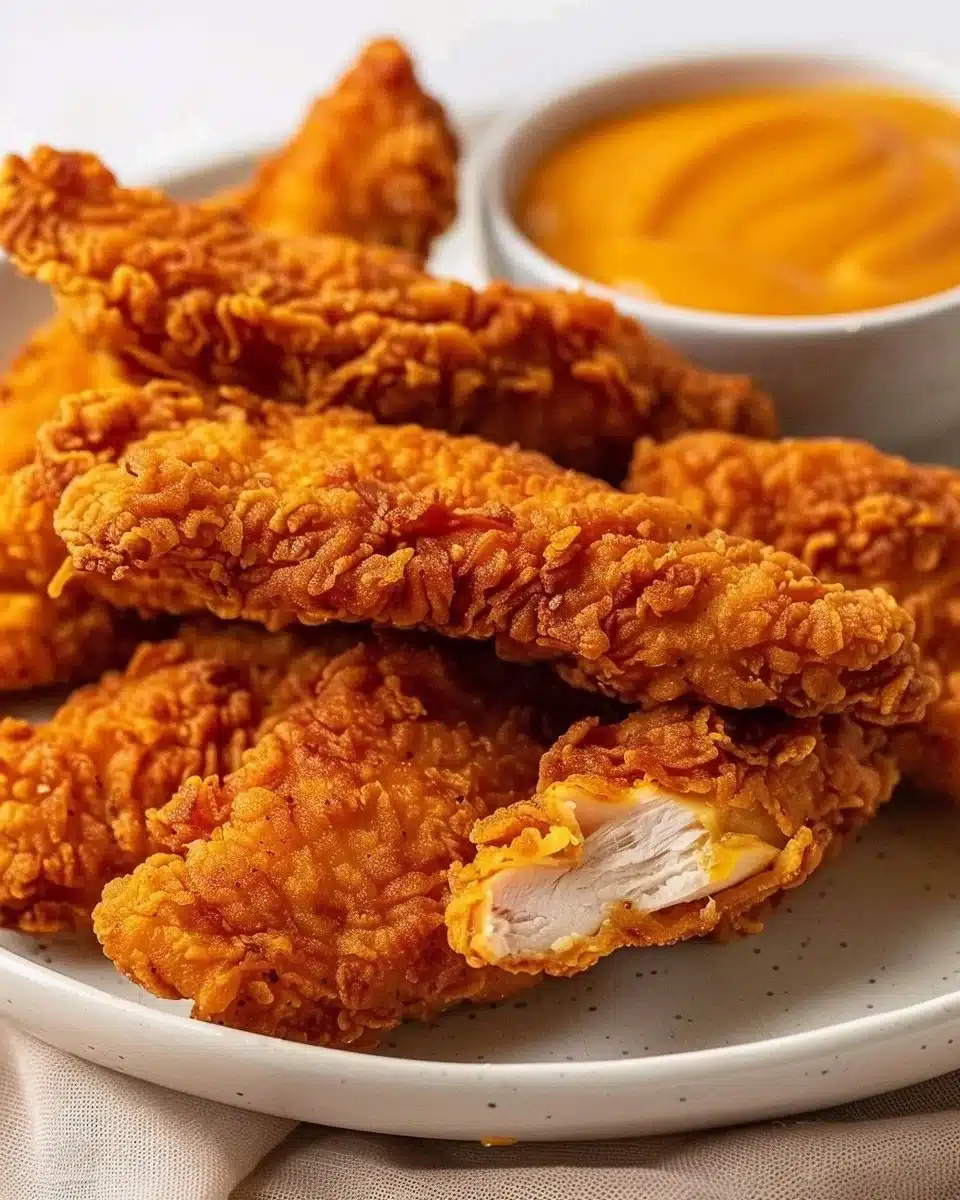
Crispy Fried Chicken Tenders are the kind of recipe that turns any night into a celebration of crunch, comfort, and simple flavors everyone loves. If you want a lively twist, try these crispy lemon parmesan chicken tenders as a bright companion to the classic version below.
why make this Crispy Fried Chicken Tenders Recipe You’ll Crave
There are a few great reasons to make this Crispy Fried Chicken Tenders recipe at home. First, homemade tenders beat frozen ones every time: they’re juicier, have a more satisfying crunch, and you control the spices and salt. Second, this recipe is fast — the active hands-on time is short, and marinating for 15 minutes is perfect for busy weeknights. Third, tenders are wildly versatile: they work as a snack, main dish, party finger food, or kid-friendly dinner. Finally, frying at home yields that restaurant-style browning and texture you can’t quite replicate in the oven.
Beyond deliciousness, making tenders yourself saves money and lets you customize heat levels, herbs, and dipping sauces. The approach in this recipe uses a buttermilk soak and a double-dredge technique (flour, then back to wet, then flour again) to build layers that fry up extra-crisp and cling to the chicken. If you enjoy trying small variations, you can easily tweak spice blends or swap baking for shallow-frying for a lighter version.
how to make Crispy Fried Chicken Tenders Recipe You’ll Crave
This section walks through the method step by step in clear, helpful detail. Follow the Directions later for the exact order, but use this narrative as a quick cooking roadmap.
Start by preparing a tangy buttermilk soak. Combine buttermilk with one beaten large egg and a pinch of salt; this mixture tenderizes the chicken and helps the coating adhere. Soak the chicken tenders for about 15 minutes — long enough to soften fibers and add moisture without taking up too much time.
While the chicken soaks, mix your dry coating: all-purpose flour and cornstarch form the base; cornstarch is key for extra crunch because it fries up crispier than flour alone. Add garlic powder, onion powder, smoked paprika, a touch of cayenne for heat, dried oregano for herbiness, and the remaining salt and pepper. The smoked paprika gives a subtle smokiness that deepens the fried flavor.
Heat neutral oil (canola or peanut) to 350°F in a deep skillet or Dutch oven. Maintain consistent temperature by frying in batches; too many pieces at once will drop the oil temperature and make the coating soggy. The double dredge — flour, back to buttermilk, then flour again — creates a thicker, irregular crust that fries to a crackly, golden finish.
Fry the tenders 3–4 minutes per side until golden brown and cooked through (internal temperature 165°F). Drain on a wire rack rather than paper towels so air circulates and the crust stays crisp. Serve hot with your favorite dipping sauces, a squeeze of lemon if desired, or alongside a simple salad and fries.

Ingredients
- 1½ lb chicken tenders
- 1 cup buttermilk
- 1 large egg
- 1½ cups all-purpose flour
- ¼ cup cornstarch
- 1 tsp garlic powder
- 1 tsp onion powder
- 1 tsp smoked paprika
- 1¼ tsp kosher salt (divided)
- ½ tsp black pepper
- About 3 cups neutral oil (canola or peanut)
- ¼ tsp cayenne pepper (for heat)
- ½ tsp dried oregano (for herby flavor)
Ingredient Notes and Substitutions:
- Chicken: If you can’t find pre-cut tenders, slice boneless, skinless chicken breasts into strips about 1–1½ inches wide. You can also use boneless thighs for a slightly fattier, more forgiving result.
- Buttermilk: If you don’t have buttermilk, make a quick substitute by adding 1 tablespoon lemon juice or white vinegar to 1 cup milk and letting it sit 5 minutes. This preserves the tenderizing acidity. (This adheres to the safe replacement guideline to use lemon juice instead of alcohol.)
- Oil: Neutral oils with high smoke points work best; canola, sunflower, or peanut oil are ideal. For allergy-friendly cooking, choose high-oleic sunflower oil or avocado oil.
- Cornstarch: Cornstarch keeps the crust extra-crisp. You can swap tapioca starch in a pinch.
- Salt: If you only have table salt, use about half the volume (kosher salt measures differently). Taste a small sample of the coating (dry) and adjust accordingly.
- Spices: Feel free to swap smoked paprika for regular paprika if you prefer less smoke, or increase cayenne for more heat.
- Herb: Dried oregano adds a Mediterranean note. For a fresher finish, add chopped fresh parsley after frying.
Directions
- Marinate Chicken: Whisk the buttermilk, egg, and ¼ tsp kosher salt together in a bowl. Add the chicken tenders and let them soak for 15 minutes. This quick soak adds flavor and tenderness without being an overnight step.
- Prepare Coating: In a shallow bowl or wide dish, mix the flour, cornstarch, garlic powder, onion powder, smoked paprika, remaining 1 tsp kosher salt, black pepper, cayenne, and dried oregano. Stir until evenly combined.
- Heat Oil: Pour about 2–3 inches of neutral oil into a deep skillet or Dutch oven and heat to 350°F (175°C). Use a thermometer for consistent results.
- Dredge Chicken: Working one piece at a time, dredge each tender in the flour mixture, then dip it back into the buttermilk briefly, and coat again with the flour mixture. Set dredged tenders on a wire rack while you finish coating.
- Fry in Batches: When the oil reaches temperature, carefully add a few tenders to the hot oil without crowding. Fry 3–4 minutes per side, flipping once, until they are golden brown and the internal temperature reaches 165°F (74°C).
- Drain & Serve: Transfer cooked tenders to a wire rack set over a baking sheet to drain and keep crispy. Let them rest for a minute or two, then serve hot with your favorite sauces, wedges of lemon, or sides.
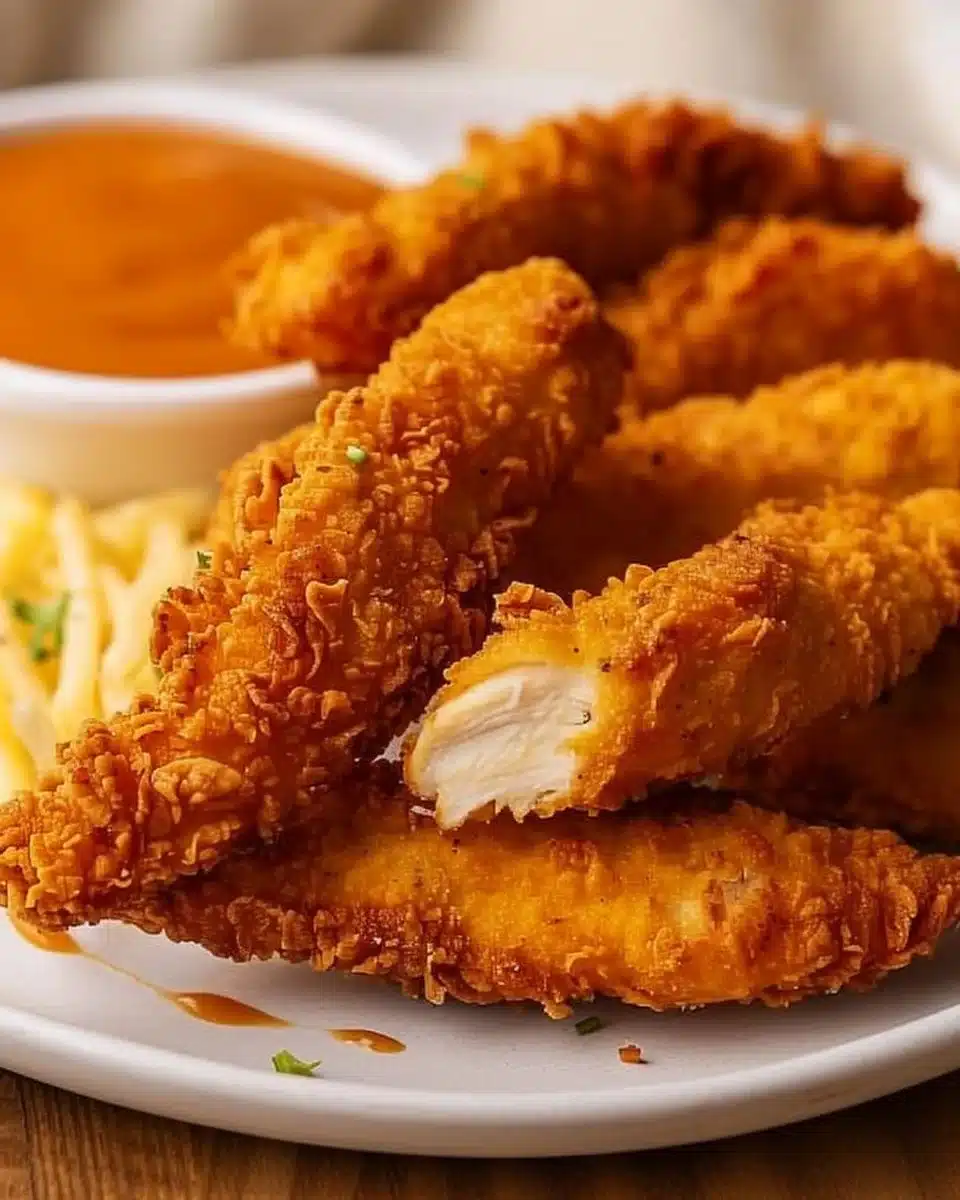
Pro Tips for Success Crispy Fried Chicken Tenders
- Use a thermometer: Maintain oil at 350°F for even browning. If the oil is too cool, coatings absorb oil and get greasy; too hot and the exterior burns before the inside cooks.
- Dry the chicken lightly: Pat tenders briefly with paper towels before dunking in the buttermilk to remove excess surface moisture. This helps the coating cling better.
- Don’t overcrowd the pan: Fry in small batches so oil temperature recovers quickly and each tender fries evenly.
- Let the crust set: After the first dredge, let tenders rest on a rack for a few minutes before frying — this helps the flour adhere and reduces shedding in the oil.
- Wire rack over paper towels: Drain on a wire rack so steam can escape and the crust stays crisp. Paper towels trap moisture and soften the crust.
- Test one before committing: Fry one tender first to check seasoning and doneness; adjust spices or time if needed.
Flavor Variations Crispy Fried Chicken Tenders
- Spicy Buffalo: Toss freshly fried tenders in a warmed sauce made of melted butter and hot sauce; serve with celery and blue cheese dressing.
- Honey-Sriracha Glaze: Drizzle equal parts honey and sriracha over hot tenders or brush lightly for a sticky-sweet heat.
- Herbed Parmesan Crunch: Mix ¼ cup grated Parmesan and 1 tbsp chopped parsley into the final dredge for a cheesy-herb crust with extra savory depth.
- Coconut-Curry Twist: Replace half the flour with desiccated coconut and add 1 tsp curry powder to the dry mix for a tropical, aromatic profile.
- Lemon-Pepper Brightness: Zest one lemon into the dry mix and omit smoked paprika; finish with a squeeze of lemon for fresh brightness.
Serving Suggestions Crispy Fried Chicken Tenders
- Classic Trio: Serve tenders with ketchup, tangy honey mustard, and ranch for a crowd-pleasing dip selection.
- Sandwich or Wrap: Pile tenders into a toasted bun or flatbread with lettuce, pickles, and slaw for a satisfying sandwich.
- Family Meal: Pair with oven fries, coleslaw, and steamed green beans for a balanced plate.
- Salad Toppers: Slice tenders over a mixed-green salad with corn, cherry tomatoes, and a lemon-herb vinaigrette for a lighter option.
- Party Platter: Arrange tenders on a platter with assorted dipping sauces, carrot sticks, and celery for game day or gatherings.
Storage and Freezing Instructions Crispy Fried Chicken Tenders
Short-term storage:
- Fridge: Cool completely, then store tenders in an airtight container lined with paper towels to absorb residual moisture. They’ll keep well for 3–4 days. Reheat in a 375°F oven on a wire rack to restore crispness.
Freezing:
- Flash-freeze: Place cooled tenders on a baking sheet in a single layer and freeze until solid (1–2 hours). Transfer to a freezer bag or airtight container; separate layers with parchment to prevent sticking. Frozen tenders last up to 2 months.
- Reheating from frozen: Reheat directly from frozen in a preheated 400°F oven on a rack for 15–20 minutes, turning once, until heated through and crisp. You can also air-fry at 375°F for 10–12 minutes, flipping halfway.
- Thawing: If thawed in the fridge overnight, re-crisp in a 375°F oven for 10–12 minutes. Avoid microwaving unless you accept a softer crust.
Make-ahead tips:
- Par-cook for busy nights: Fry tenders for 2–3 minutes per side, chill, then finish frying when ready to serve for a freshly crisp exterior.
- Keep coatings ready: Store the seasoned flour mixture in a sealed jar for quick assembly later.
Nutrition Facts (Per Serving)
Values are approximate and based on a recipe yield of 4 servings.
- Calories: ~650 kcal
- Protein: ~56 g
- Carbohydrates: ~43 g
- Fat: ~30 g
- Fiber: ~1.5 g
- Sodium: ~900 mg
Nutrition notes:
- These are estimates that depend on the exact size of tenders, oil absorption, and specific ingredient brands. Use a kitchen scale and nutrition calculator if you need precise numbers for dietary tracking.
- To reduce calories and fat, consider baking or air-frying with a light spray of oil, or using boneless skinless thighs trimmed of excess fat.
FAQ About Crispy Fried Chicken Tenders
How long should I marinate the chicken tenders in buttermilk?
A 15-minute soak, as listed in the recipe, is enough to tenderize and add flavor without making the chicken overly soft. If you have extra time, you can marinate up to a few hours in the refrigerator, but avoid marinating for more than 12 hours because the acid can break down the meat texture too much. Always refrigerate while marinating and discard used marinade.
Can I bake these tenders instead of frying them?
Yes — baking is a lighter option. Preheat the oven to 425°F and place dredged tenders on a wire rack over a sheet pan; spray lightly with oil and bake about 12–18 minutes, flipping halfway, until golden and internal temperature reaches 165°F. The crust will be crisper if you use cornstarch and a light oil mist, but deep-frying delivers the most classic crunch.
How do I know when the tenders are fully cooked?
The safest way is to use an instant-read thermometer; the internal temperature should reach 165°F. If you don’t have a thermometer, cut into the thickest part — the juices should run clear and there should be no pink. However, color alone can be misleading, so a thermometer is recommended for reliable doneness.
Can I prepare these with frozen chicken tenders?
If the tenders are frozen raw, fully thaw them in the refrigerator before marinating and frying; marinating frozen chicken doesn’t work well because it prevents the marinade from penetrating evenly. If they are already breaded and frozen from a store, follow the manufacturer’s instructions, or reheat from frozen as described in the storage section to maintain texture.
What oil is best for frying chicken tenders?
Use a neutral oil with a high smoke point, such as peanut, canola, sunflower, or avocado oil. Peanut oil has excellent flavor and heat stability; if you have a peanut allergy, choose canola or high-oleic sunflower oil. Avoid butter or olive oil for deep frying because they have lower smoke points and can burn.
How do I prevent the coating from falling off during frying?
A few steps help the coating adhere: pat the chicken lightly before soaking, allow the first flour dredge to rest briefly on a rack so it binds, and refrain from overcrowding the pan (which disturbs the coating during frying). Make sure the oil is hot enough (350°F) so the crust sets quickly. Using cornstarch in the mix also improves adherence and crispness.
Final Thoughts
This Crispy Fried Chicken Tenders recipe balances a tender, juicy interior with a satisfyingly crunchy crust — all with a simple pantry spice blend and an easy double-dredge technique. It’s flexible enough to satisfy picky eaters and creative enough for cooks who like to experiment with flavors. Whether you’re feeding a crowd, packing lunches, or just craving a nostalgic, crunchy meal, these tenders are worth adding to your go-to recipe collection. Enjoy them hot, pair them with your favorite sauces, and remember the simple tips here to keep the crust crisp and perfectly golden every time.
Print
Crispy Fried Chicken Tenders
- Total Time: 30 minutes
- Yield: 4 servings
- Diet: None
Description
Deliciously crunchy and tender chicken tenders perfect for any occasion.
Ingredients
- 1½ lb chicken tenders
- 1 cup buttermilk
- 1 large egg
- 1½ cups all-purpose flour
- ¼ cup cornstarch
- 1 tsp garlic powder
- 1 tsp onion powder
- 1 tsp smoked paprika
- 1¼ tsp kosher salt (divided)
- ½ tsp black pepper
- About 3 cups neutral oil (canola or peanut)
- ¼ tsp cayenne pepper
- ½ tsp dried oregano
Instructions
- Whisk buttermilk, egg, and ¼ tsp kosher salt together in a bowl; soak chicken tenders for 15 minutes.
- In a shallow bowl, mix flour, cornstarch, garlic powder, onion powder, smoked paprika, remaining salt, black pepper, cayenne, and dried oregano.
- Heat 2–3 inches of neutral oil in a deep skillet or Dutch oven to 350°F (175°C).
- Dredge each tender in the flour mixture, dip briefly in buttermilk, then coat again with flour.
- Fry tenders in batches for 3–4 minutes per side until golden brown and internal temperature reaches 165°F.
- Drain cooked tenders on a wire rack and serve hot with sauces.
Notes
Maintain oil temperature for even browning and fry in small batches to avoid sogginess.
- Prep Time: 15 minutes
- Cook Time: 15 minutes
- Category: Main Course
- Method: Frying
- Cuisine: American